How to Test Pool pH in 5 Simple Steps
Maintaining your pool’s pH balance is essential for swimmer comfort and equipment longevity. You should test the pH regularly to avoid issues like cloudy water or corrosion.
With a few simple steps, you can collect an accurate sample and use straightforward tools to get reliable results.
Understanding the process before making adjustments will help keep your pool safe and inviting all season long.
Why Testing Your Pool’s pH Matters
Why should you test your pool’s pH regularly? Maintaining the right pH balance ensures your pool water stays safe, comfortable, and clean.
When the pH is too low, the water becomes acidic, which can irritate your skin and eyes and corrode pool equipment. If the pH is too high, it causes cloudy water, scaling, and reduces chlorine’s effectiveness, making it harder to kill harmful bacteria.
Regular testing helps you catch imbalances early, preventing damage and costly repairs. By keeping your pool’s pH within the ideal range of 7.2 to 7.8, you protect your investment and create a pleasant swimming environment. Don’t wait for problems to show up. Testing keeps your pool in top shape.
Get the Tools You Need to Test Your Pool’s pH
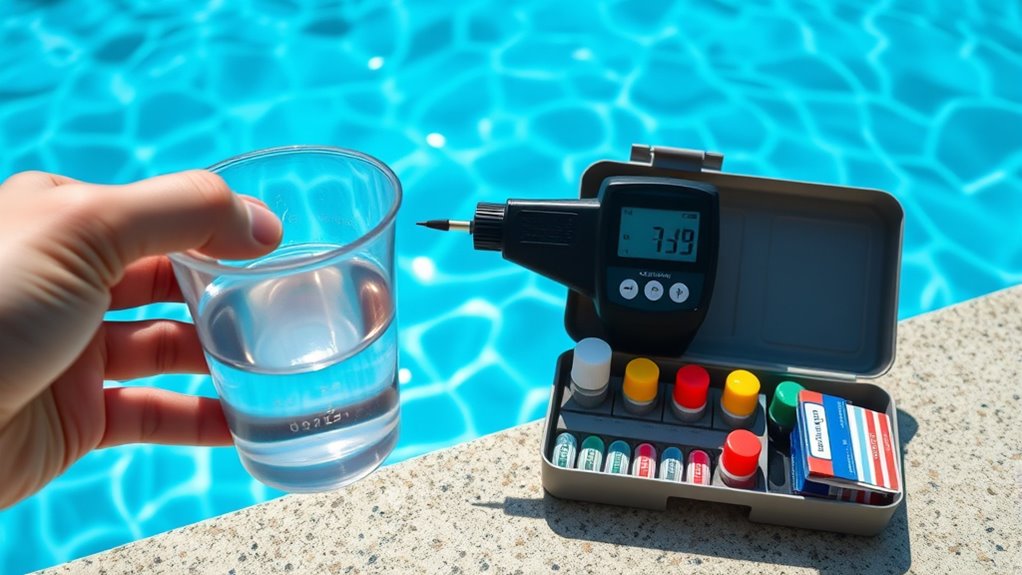
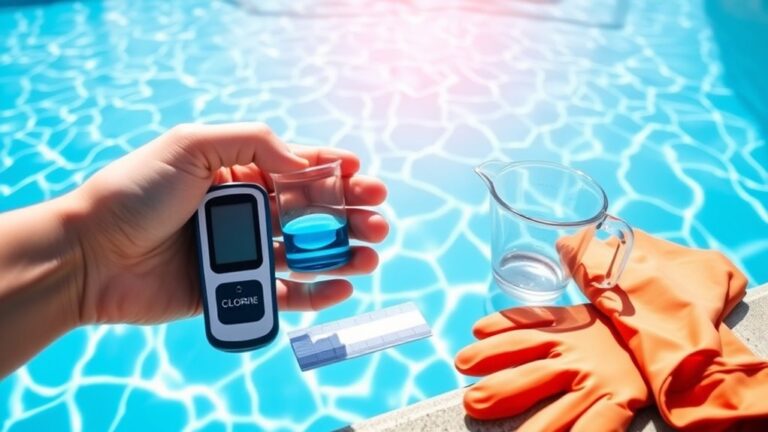
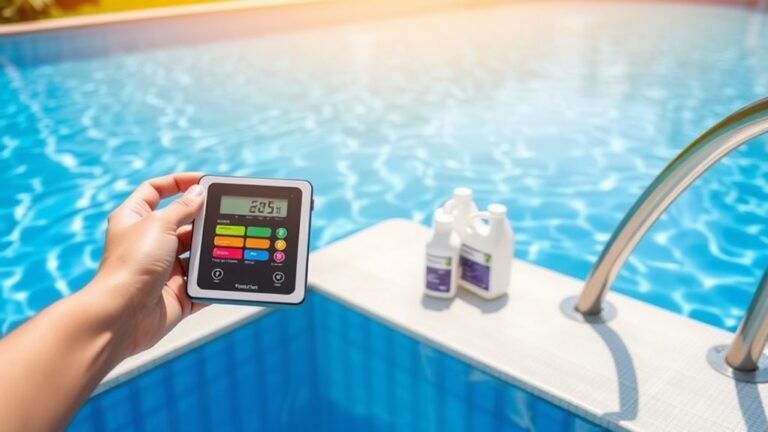
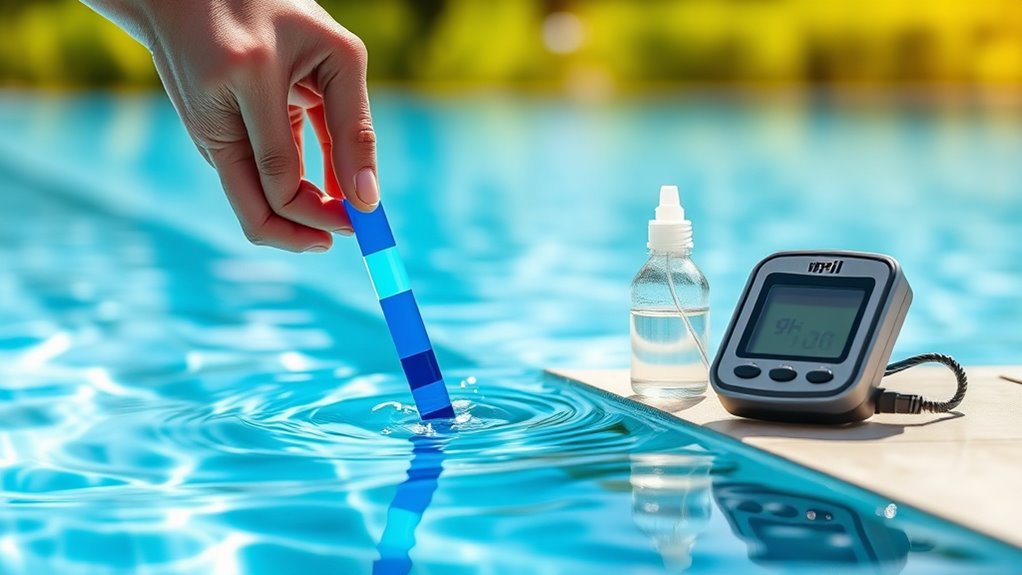
Before you can accurately check your pool’s pH, you need the right testing tools on hand. Reliable tools guarantee precise readings to keep your pool safe and comfortable. The most common options include pH test strips and liquid test kits, each offering quick results. Digital pH meters are available for those wanting more accuracy and ease.
Here’s a quick look at what you might need:
| Tool Type | Why You’ll Love It |
|---|---|
| pH Test Strips | Fast, simple, and affordable |
| Liquid Test Kits | More detailed color comparison |
| Digital Meters | Highly accurate, easy to read |
Choose tools that fit your comfort level and budget for the best pool care experience.
How to Collect an Accurate Water Sample
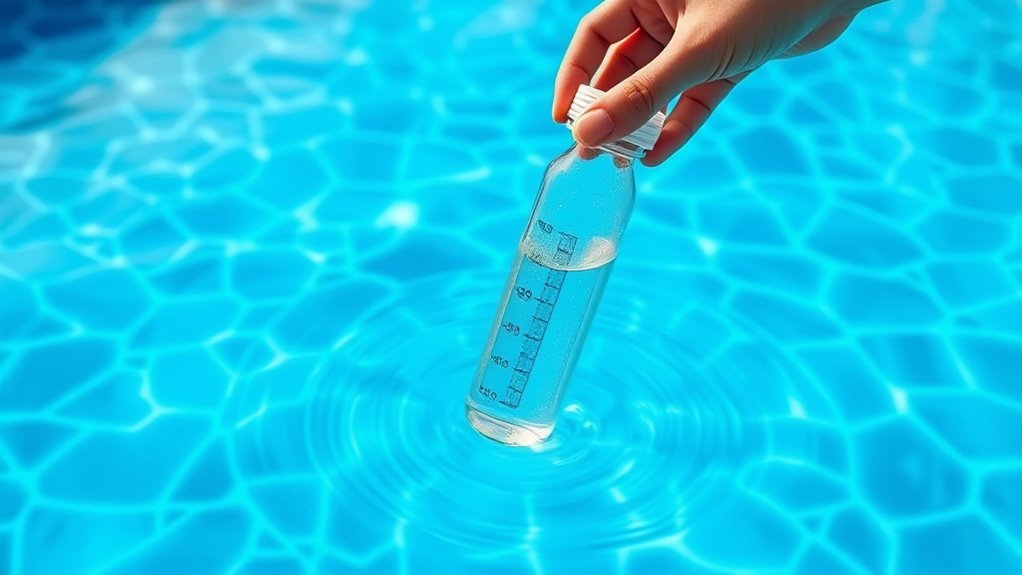
Although testing your pool’s pH is straightforward, collecting an accurate water sample is vital for reliable results. Start by choosing a spot about elbow-deep in the pool, roughly 18 inches below the surface to avoid surface contaminants or debris. Avoid collecting water near skimmers, drains, or return jets, as these areas don’t represent the overall pool chemistry.
Use a clean container or the sample cup from your test kit, rinsing it with pool water before filling. Submerge the container facing upward to prevent air bubbles, filling it slowly to avoid agitation that can alter the water’s properties. Once you have your sample, test it promptly to ensure the pH reading reflects the pool’s true condition at that moment.
How to Use Test Strips and Liquid Kits
When you’re ready to test your pool’s pH, using test strips or liquid kits provides quick and reliable results. Both methods are straightforward but require careful handling to ensure accuracy. Here’s how to use them:
- Collect Water Sample: Use a clean container to collect water from elbow depth. Avoid areas near jets and surface debris.
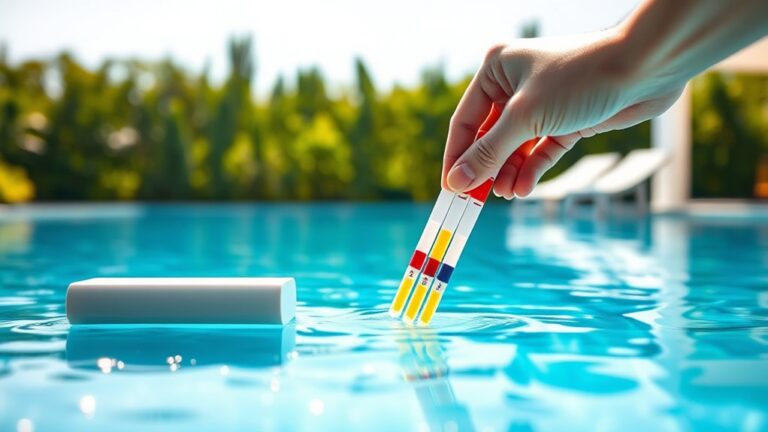
- Test Strips: Dip a test strip into the water for a few seconds. Remove it and wait for the colors to develop.
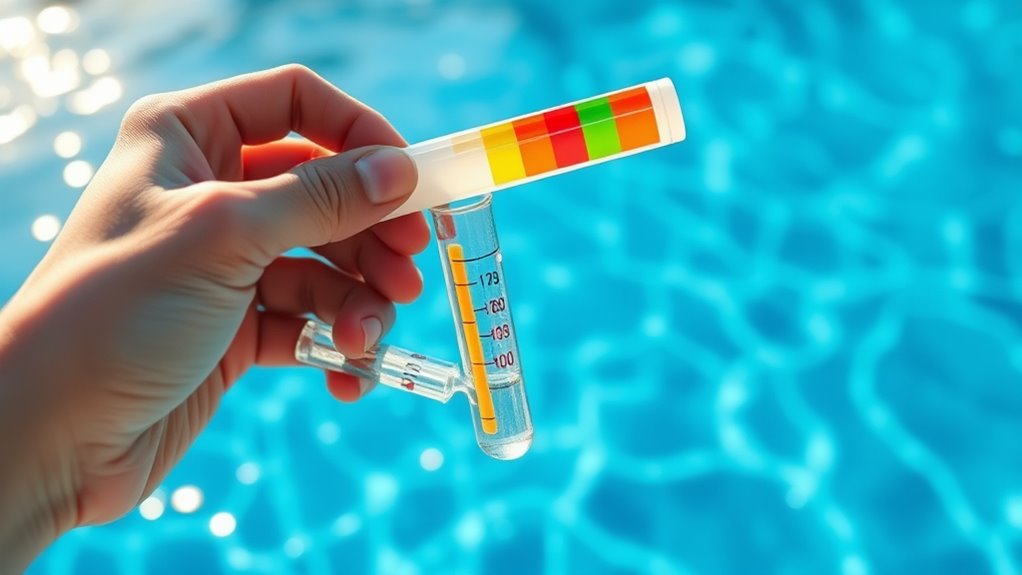
- Liquid Kits: Fill the test vial with pool water. Add the recommended drops of reagent and gently shake.
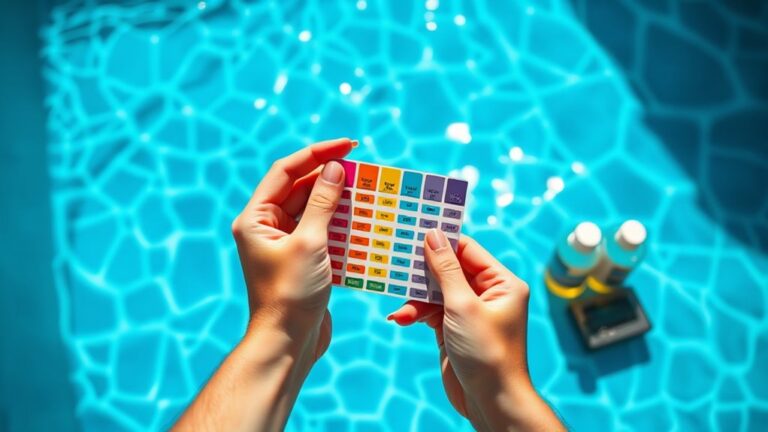
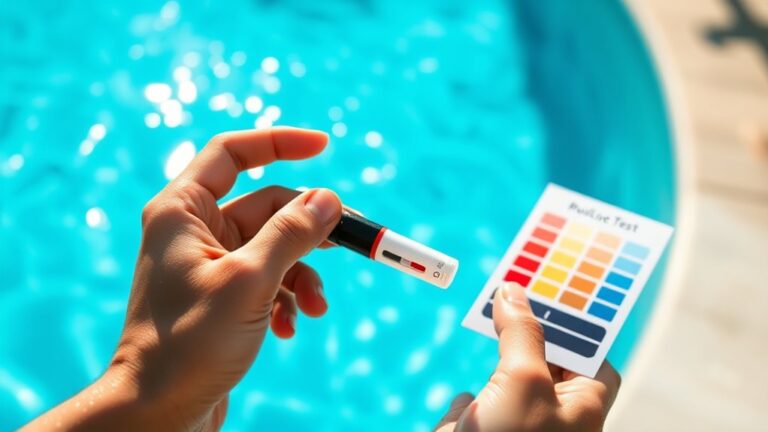
- Compare Colors: Match the strip or liquid color change against the provided chart to determine the pH level.
This quick process helps you monitor your pool’s pH accurately.
How to Adjust Your Pool’s pH Safely
Since maintaining the right pH balance is essential for both swimmer comfort and pool equipment longevity, you’ll need to modify your pool’s pH carefully and methodically. First, test your pool water to determine if the pH is too high or too low.
If it’s above 7.8, add a pH decreaser like muriatic acid or sodium bisulfate, following the product instructions closely. If it’s below 7.2, use a pH increaser such as soda ash.
Always add chemicals gradually, distributing them evenly around the pool while the pump runs to ensure proper mixing. Avoid adding too much at once to prevent sudden pH swings. Finally, retest the water after a few hours and adjust again if necessary to keep your pool balanced and safe.
Frequently Asked Questions
How Often Should I Test My Pool’s pH During Swimming Season?
You should test your pool’s pH at least twice a week during swimming season to maintain balanced water. For pools with heavy use, daily testing is recommended. Regular pH checks help you catch changes early, allowing timely chemical adjustments to keep the water safe and comfortable. Always test after heavy rain or adding chemicals, as these events can quickly affect pH levels.
Can Pool pH Levels Affect Chlorine Effectiveness?
Pool pH levels significantly impact chlorine effectiveness. When pH is too high, chlorine becomes less potent, reducing its ability to kill germs. Conversely, if pH is too low, chlorine can be overly harsh, causing skin and eye irritation. Maintaining a balanced pH ensures chlorine works optimally, keeping your pool water clean, safe, and comfortable for swimming.
What Causes Sudden Changes in Pool pH?
Sudden changes in your pool’s pH are typically caused by heavy rain, adding chemicals, or a high number of swimmers. Acidic rainwater lowers pH, while chemicals like chlorine and algaecides can quickly shift pH levels. Overusing stabilizer or shock treatment may also cause pH spikes. Monitoring these factors regularly helps maintain balanced pool pH and ensures a safe swimming environment.
Are Digital pH Meters More Accurate Than Test Strips?
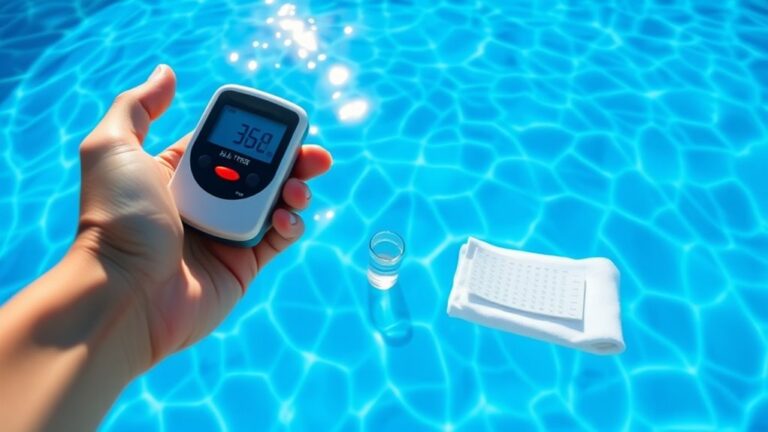
Digital pH meters are generally more accurate than test strips because they provide precise numerical readings, minimizing guesswork and human error. While test strips offer quick and convenient results, their color matching can be subjective and less reliable. For consistent and accurate pH measurements—especially important for maintaining pool water balance—investing in a quality digital pH meter is recommended. Be sure to calibrate your meter regularly to ensure optimal performance.
How Does Pool pH Impact Swimmer Comfort?
Pool pH plays a crucial role in swimmer comfort. When the pH level is too low, it causes eye and skin irritation, making your swim uncomfortable with a stinging sensation. Conversely, a high pH creates a soapy feeling in the water that also irritates your skin and eyes. Keeping your pool pH balanced ensures a pleasant, comfortable swim without burning or itching.
Conclusion
Now that you know how to nab a neat, natural sample and navigate your test strips or liquid kits, you’re set to safeguard your swimming spot. Staying sharp with simple, speedy pH checks helps you spot shifts and swiftly stabilize your pool’s perfect pH. Keep your water clean, clear, and comfortably balanced because a well-maintained pool promises plenty of pleasant, playful, and invigorating poolside moments!