How Do You Test Pool Chlorine in 7 Easy Steps?
Testing your pool’s chlorine levels is essential for keeping the water safe and comfortable. You might think it’s complicated, but it’s straightforward when you follow the right steps.
With the right tools and techniques, you can quickly get accurate results and know how to adjust your pool’s chemistry. Understanding this process can help you maintain a healthier swimming environment.
So where do you start?
Why Testing Your Pool Chlorine Levels Matters
Although keeping your pool clean might seem straightforward, testing your chlorine levels regularly is essential. It guarantees the water stays safe and clear.
When you monitor chlorine, you prevent harmful bacteria and algae from thriving, protecting everyone who swims. Too little chlorine allows germs to multiply, increasing infection risks.
Too much chlorine can irritate skin and eyes, making swimming uncomfortable. Testing also helps you maintain balanced water chemistry, preserving your pool equipment and surfaces.
Choosing the Best Chlorine Test Kit for Accuracy and Ease
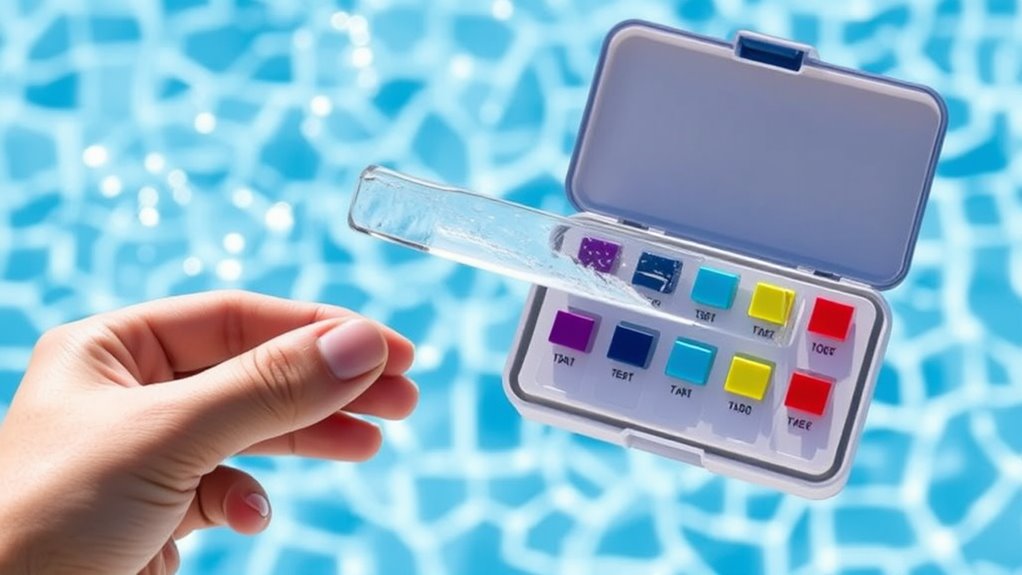
When you want reliable results, choosing the right chlorine test kit makes all the difference. Look for kits that measure both free and total chlorine for a complete picture of your pool’s sanitation.
Choosing a chlorine test kit that measures both free and total chlorine ensures accurate pool sanitation results.
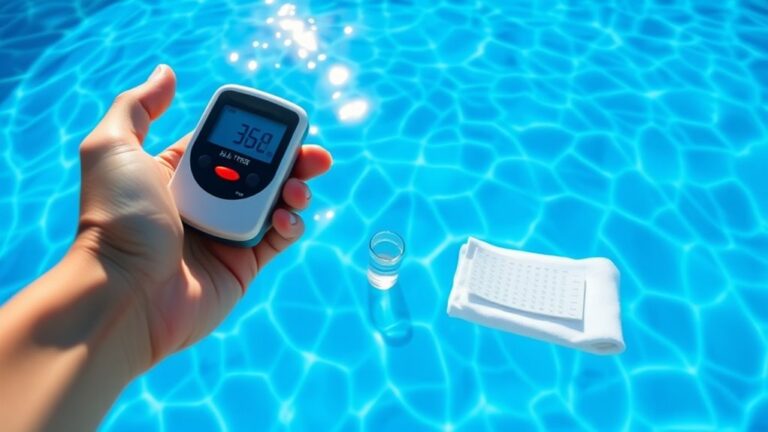
Digital kits offer quick, accurate readings with minimal guesswork. Liquid reagent kits remain popular for their affordability and precision.
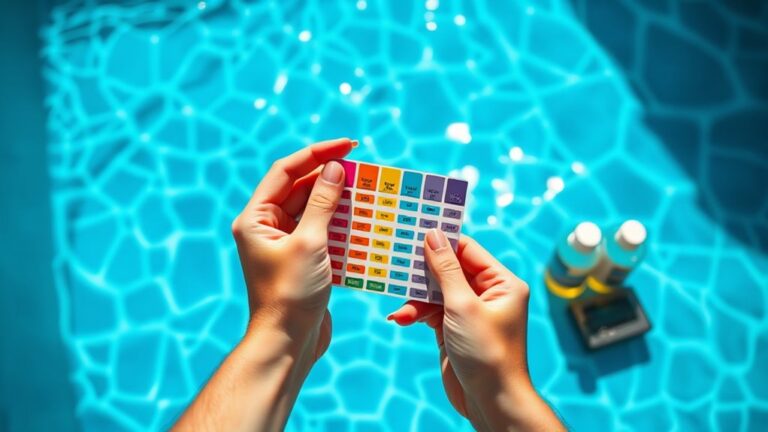
Consider ease of use. Kits with clear instructions and color charts help you interpret results confidently.
Check the kit’s sensitivity range to ensure it matches your pool’s typical chlorine levels. Avoid kits that require excessive chemicals or long wait times.
When and Where to Take a Pool Water Sample for Chlorine Testing
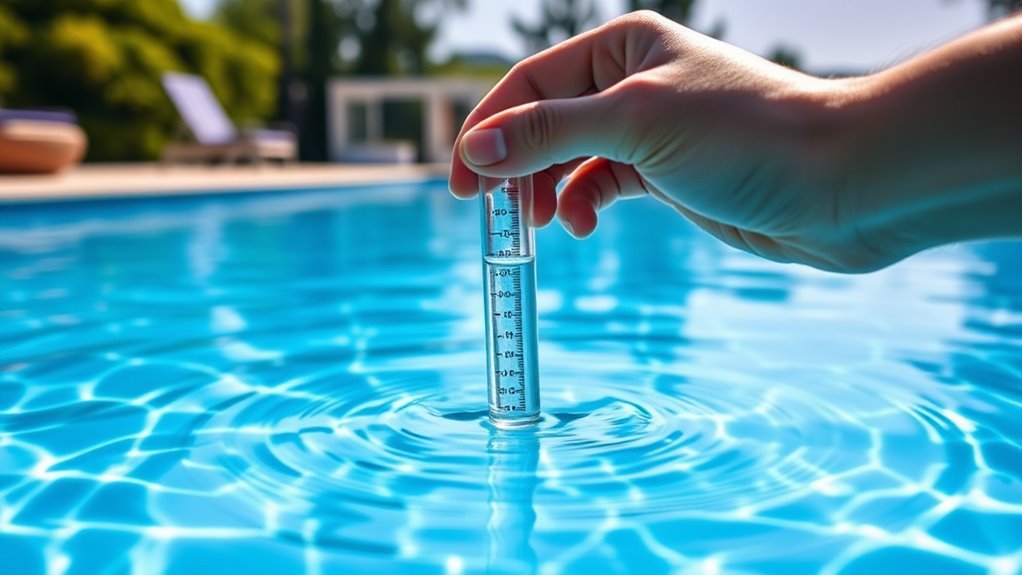
You’ll want to test your pool water at the right times, like early morning or late evening when chlorine levels are most stable. Grab your sample from about elbow-deep near a return jet to get an accurate reading. Choosing the right time and spot helps you keep your pool safe and balanced.
Ideal Sampling Times
To get accurate chlorine readings, take your pool water sample at specific times and locations. The best time to test is in the morning, before anyone swims or before adding chemicals.
This timing helps you measure chlorine levels without interference from sunlight or recent pool use. Avoid testing right after shocking the pool, as chlorine levels will be unusually high and not reflective of normal conditions.
Test consistently around the same time each day to track trends accurately. By choosing ideal sampling times, you’ll get reliable data, making it easier to maintain safe and balanced chlorine levels in your pool.
Best Sampling Locations
Sampling times set the stage for accurate chlorine testing, but where you collect your pool water sample plays an equally important role. You want to avoid spots near returns, skimmers, or pool edges, as these areas can have uneven chlorine levels.
Instead, aim for a location about 12 to 18 inches below the surface in the pool’s main body where water circulates well. This gives you a representative sample of your pool’s chlorine concentration.
Take the sample away from direct sunlight or debris to prevent contamination. If your pool has multiple deep and shallow ends, test both to ensure balanced chlorine distribution.
How to Collect Your Pool Water Sample for Accurate Results
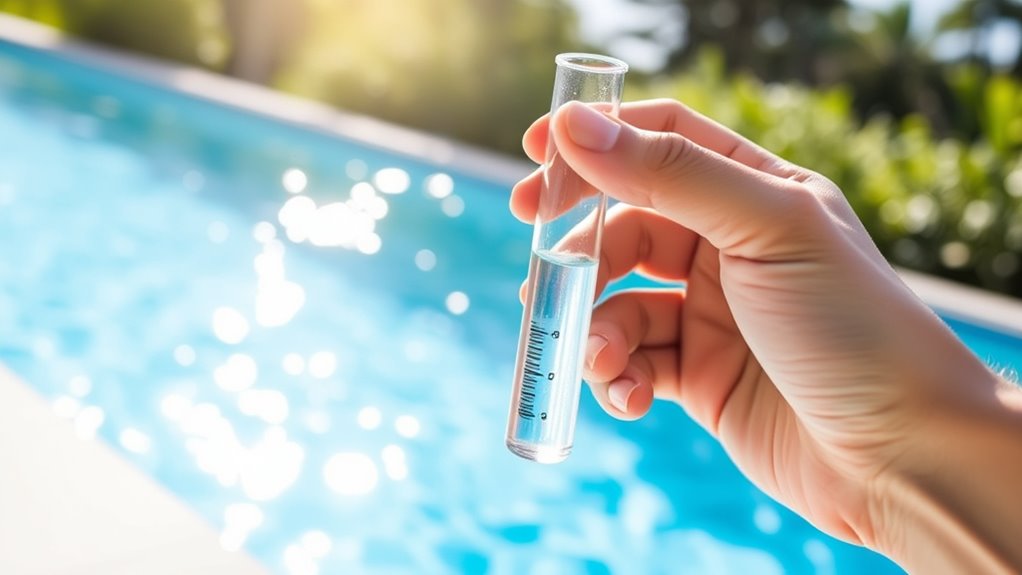
When you want accurate chlorine readings, collecting your pool water sample properly is essential. Use a clean container—avoid anything exposed to soap or chemicals.
Accurate chlorine readings start with collecting your pool water sample using a clean, uncontaminated container.
Dip the container about 18 inches below the surface where the water circulates well. Face it against the current if possible to avoid debris and surface contaminants.
Fill the container completely to minimize air exposure, which can affect chlorine levels. Avoid scooping water from the surface or near the skimmer, as this can skew results.
Once you’ve collected your sample, test it promptly. Delaying can cause chlorine to dissipate, leading to inaccurate readings.
Testing Your Pool’s Chlorine: Using Strips or Liquid Kits
You can test your pool’s chlorine using either test strips or liquid kits, each with its own benefits. Test strips are quick and easy, while liquid kits often provide more precise results. Let’s compare their accuracy and ease to help you choose the best option for your pool.
Choosing Between Test Strips
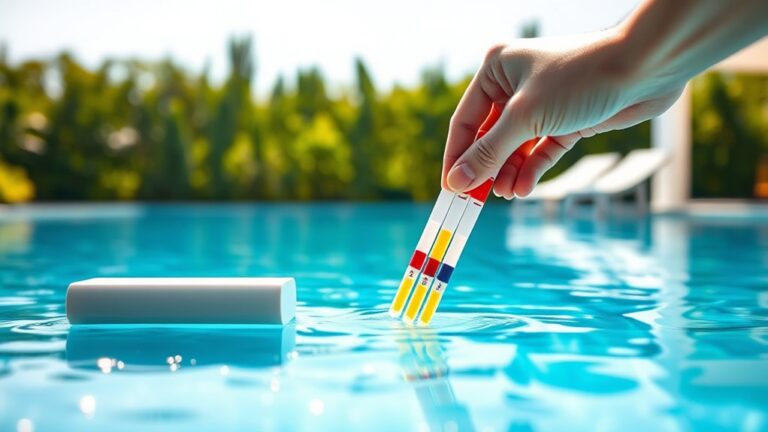
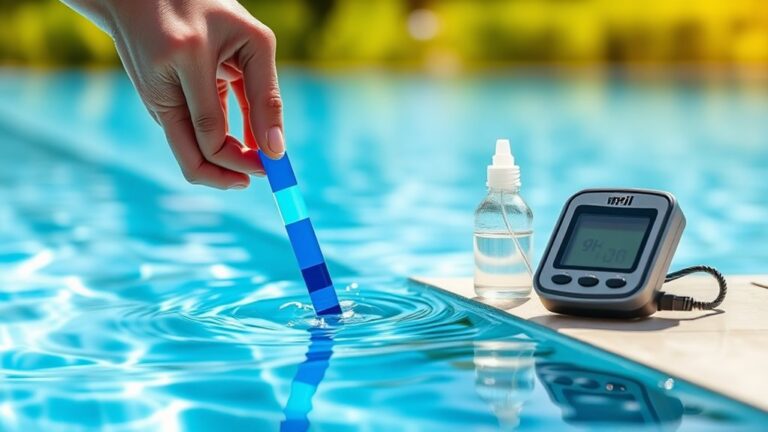
How do you decide between test strips and liquid kits for checking your pool’s chlorine levels? Test strips offer quick, simple results. You dip a strip in your pool water and compare the colors to a chart. They’re convenient, portable, and don’t require extra tools.
If you want fast, on-the-spot readings without fuss, strips are a solid choice. However, keep in mind that test strips can be less precise than liquid kits because color matching can be subjective. They’re great for routine checks but might not catch subtle changes.
Also, strips have a limited shelf life and can be affected by humidity. If you want ease and speed with decent accuracy, test strips are your go-to. Store them properly and replace them regularly for best results.
Using Liquid Test Kits
Although liquid test kits take more time than strips, they deliver highly accurate measurements of your pool’s chlorine levels. You’ll appreciate the precision when maintaining safe water.
To use a liquid test kit:
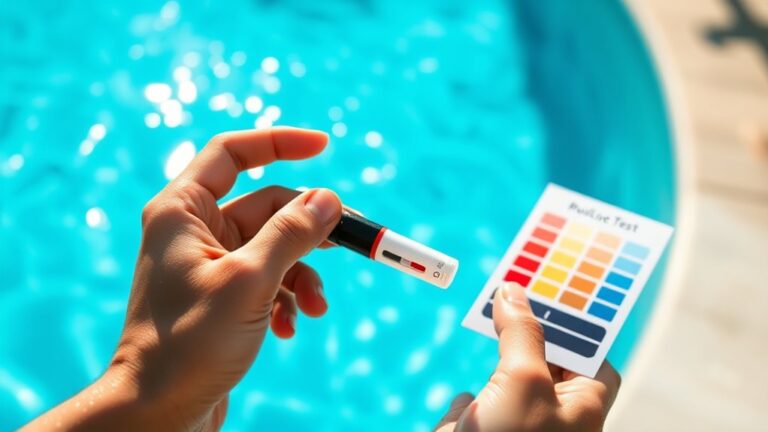
- Fill the test vial with pool water up to the marked line. This step is essential for accuracy.
- Add the recommended drops of reagent, then cap and shake the vial gently to mix.
- Compare the resulting color to the kit’s chart to find your chlorine level.
Using liquid kits might feel more involved, but the confidence you gain in knowing your pool is balanced is well worth it. You’ll enjoy swimming without worry, knowing your water is clean and safe.
Comparing Accuracy And Ease
While both test strips and liquid kits measure chlorine levels effectively, they differ markedly in accuracy and ease of use. Test strips offer quick results—you dip a strip and compare its color to a chart. They are convenient and perfect for a fast check, but accuracy can vary depending on storage and exposure to air or moisture.
Liquid kits require more time and effort. You add reagents to a water sample and observe a color change. This process tends to be more precise, especially for detecting subtle chlorine level changes. If you want speed and simplicity, strips work well. For reliable accuracy, especially in regular maintenance, liquid kits are the better choice.
Understanding What Your Chlorine Test Results Mean
Once you’ve tested your pool’s chlorine levels, you need to interpret the results correctly to keep your water safe and balanced. Chlorine levels tell you if your pool is clean, safe, and enjoyable. Here’s what your results mean:
- Low Chlorine: This can make your pool a breeding ground for bacteria and algae. It risks your health and enjoyment.
- Ideal Range: Usually between 1-3 ppm, this range ensures your water is sanitized without causing irritation.
- High Chlorine: Levels above 5 ppm can irritate skin and eyes and damage pool equipment. This makes swimming uncomfortable.
Understanding these results helps you feel confident in your pool care routine. It also protects your family from potential health hazards.
How to Safely Adjust Chlorine Levels Based on Your Test Results
Knowing what your chlorine test results mean sets the stage for balancing your pool’s chemistry. If levels are too low, add chlorine gradually. Start with small doses to avoid over-chlorinating.
Use stabilized chlorine like tablets or granules for steady results. If levels are too high, stop adding chlorine and let the sun break it down. You can also partially drain and refill the pool with fresh water.
Always wear gloves and goggles when handling chlorine to protect your skin and eyes. After adjusting, wait at least a few hours before retesting to ensure accuracy.
Maintaining chlorine within the ideal range keeps your pool safe and enjoyable. It prevents algae growth and harmful bacteria without irritating swimmers.
Frequently Asked Questions
Can Pool Chlorine Levels Affect Pool Equipment Lifespan?
Yes, pool chlorine levels directly impact the lifespan of your pool equipment. High chlorine levels can corrode metal components such as pumps, heaters, and filters, leading to premature wear and costly repairs. Conversely, low chlorine levels allow algae and bacteria to grow, making your equipment work harder and increasing the risk of damage. Maintaining balanced chlorine levels is essential to protect your pool equipment and ensure it operates efficiently and lasts longer.
How Does Sunlight Impact Chlorine Effectiveness in Pools?
Sunlight significantly reduces chlorine effectiveness in pools by breaking it down through UV rays. This degradation decreases chlorine’s ability to kill germs, requiring more frequent chlorine additions. To maintain proper sanitation, use stabilizers like cyanuric acid, which protect chlorine from sunlight and extend its lifespan. Without stabilizers, chlorine dissipates quickly, leading to reduced pool cleanliness and increased maintenance.
Are There Natural Alternatives to Chlorine for Pool Sanitation?
Yes, natural alternatives to chlorine for pool sanitation include saltwater systems, which produce chlorine from salt, and mineral purifiers that use copper and silver ions to eliminate bacteria. Additionally, ozone and UV systems sanitize pools without chemicals. These options require more maintenance and careful monitoring to ensure your pool remains safe and clean. When choosing an alternative, balance convenience with effectiveness for the best results.
What Are Common Signs of Chlorine Overdose in Pools?
Common signs of chlorine overdose in pools include a strong, harsh chlorine smell that irritates your eyes and skin. You may also notice cloudy or hazy water instead of clear blue. Pool surfaces can become rough, faded, or damaged, and pool equipment might corrode faster than usual. Additionally, swimmers experiencing burning sensations or breathing difficulties are clear indicators that chlorine levels are too high and need immediate adjustment. Regular testing and balancing of chlorine levels can help prevent these issues.
Can Pool Chlorine Testing Help Prevent Algae Growth?
Regularly testing your pool chlorine is essential to prevent algae growth. Maintaining balanced chlorine levels inhibits algae from developing and spreading, which keeps your pool water clear and safe. If chlorine levels fall too low, algae can quickly take over, causing green, cloudy water. By frequently checking and adjusting chlorine, you can stop algae before it starts. Make chlorine testing a routine to ensure a healthy, algae-free pool.
Conclusion
Testing your pool chlorine isn’t a chore—it’s your pool’s way of saying, “I need care.” By following these steps, you’ll keep your water sparkling and safe. This turns guesswork into confidence.
Remember, a well-tested pool is like a trusted friend, always ready to refresh and protect you. Plunge into regular testing because healthy water means happy swims every time you jump in. Your pool deserves nothing less.