7 Easy Steps to Test Salt Level in Pool
Maintaining the correct salt level in your pool is crucial for ensuring optimal water quality and the efficient performance of your pool equipment. Proper salt balance helps prevent issues such as corrosion, scaling, and ineffective sanitation, which can compromise both the pool’s cleanliness and the longevity of its components.
Testing your pool’s salt level may seem daunting at first, but with the right tools and a clear, step-by-step approach, it becomes a simple and routine task. Accurately measuring salt levels allows you to make informed adjustments, keeping your pool safe, comfortable, and inviting for swimmers.
Whether you are a new pool owner or looking to improve your maintenance routine, understanding how to test salt levels correctly is a vital skill. In this article, I will explain seven easy steps to help you accurately test and maintain the ideal salt level in your pool.
Why Testing Your Pool’s Salt Level Matters
Although saltwater pools require less maintenance than traditional chlorine pools, regularly testing the salt level remains essential to guarantee proper sanitation and equipment longevity. Maintaining the correct salt concentration ensures the salt chlorine generator functions effectively, producing adequate chlorine to keep the water clean and safe.
Imbalanced salt levels can lead to insufficient sanitization, promoting algae and bacteria growth. Conversely, excessively high salt concentrations may corrode pool components, including the generator and metal fixtures, shortening their lifespan. Fluctuating salt levels can impact water chemistry, affecting swimmer comfort and pool clarity.
Regular monitoring allows for timely adjustments, preventing costly repairs and health risks. Therefore, consistent salt level testing is a critical practice in preserving pool performance and safety.
Tools Needed to Test Pool Salt Levels
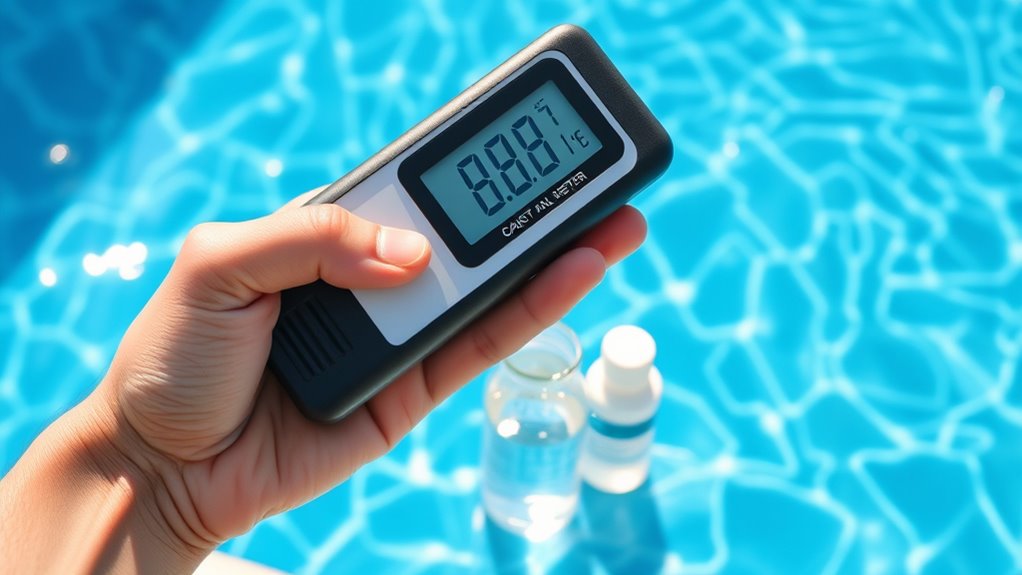
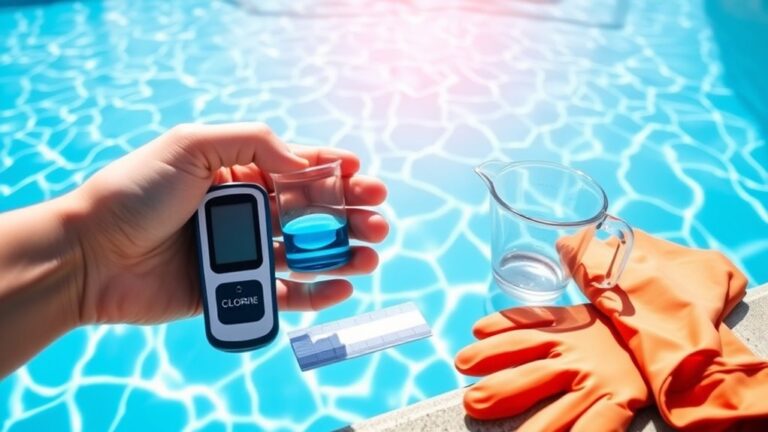
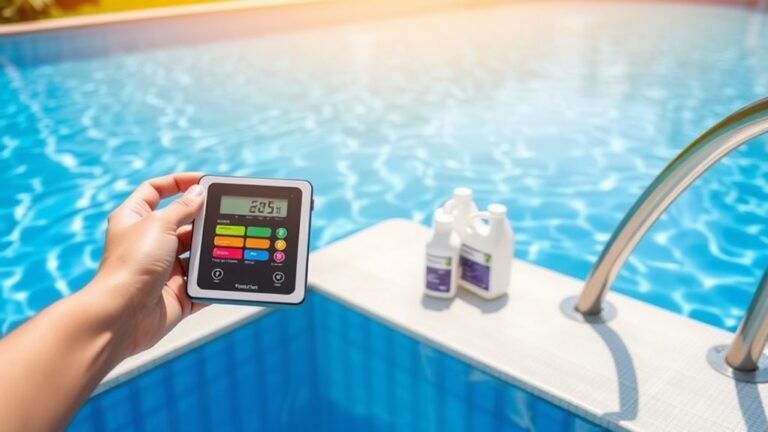
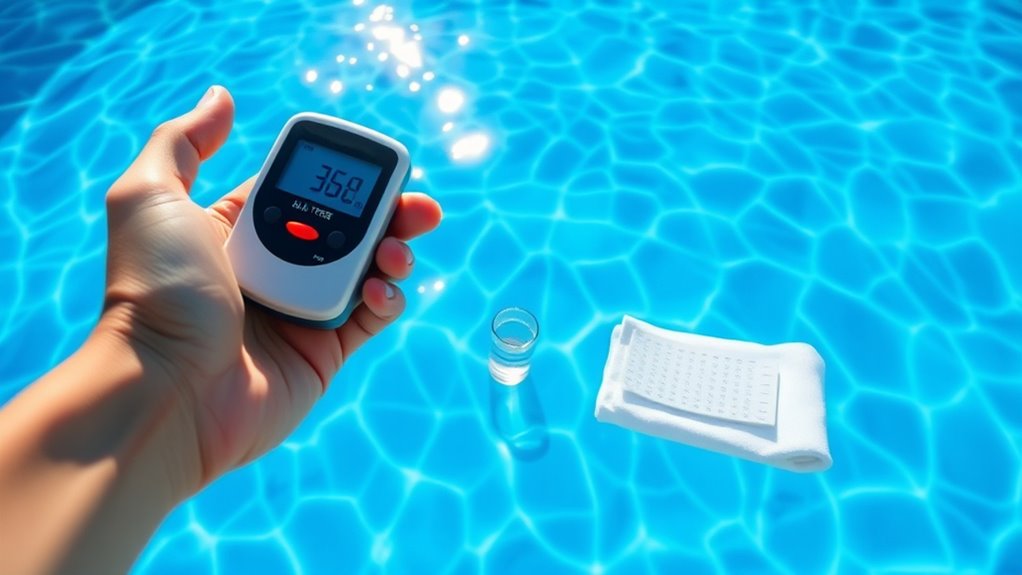
Accurate measurement of salt levels is a key step in maintaining a saltwater pool’s balance and functionality. To achieve this, specific tools are required. The primary tool is a saltwater test meter or digital salt tester, which provides quick and precise readings of salt concentration.
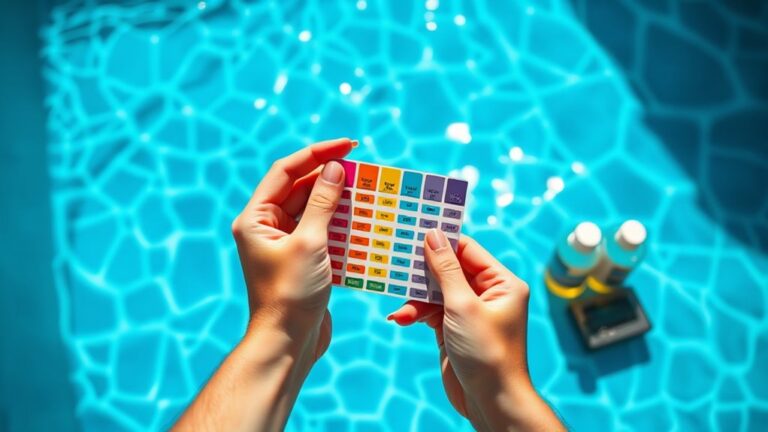
Alternatively, salt test strips offer a simpler, cost-effective method by changing color based on salt levels, though they are less precise. A clean container or sample cup is also necessary to collect pool water for testing without contamination. Additionally, calibration solutions or reference standards may be needed to ensure the accuracy of digital meters over time.
These tools collectively enable pool owners or technicians to monitor salt levels effectively, guaranteeing the pool system operates at its best and prevents equipment damage.
Find the Best Spot for a Saltwater Sample
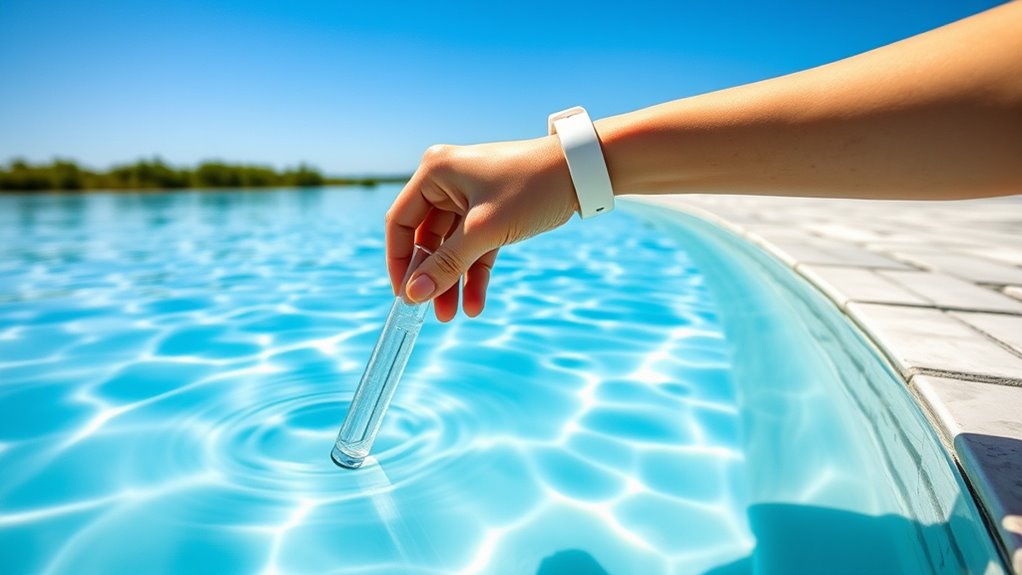
Where in the pool the saltwater sample is taken impacts the reliability of the test results. Ideally, the sample should be collected from a location where the water is well-circulated and representative of overall pool conditions.
Avoid taking samples near the surface or close to the pool’s edges. These areas may have salt concentration variations due to evaporation or dilution from rainfall.
The best spot is typically about 12 to 18 inches below the water surface, near the pool’s midpoint lengthwise and widthwise. This depth and position help guarantee a balanced mixture of water, minimizing localized fluctuations and providing a more accurate salt level reading.
Consistency in the sampling location is important when conducting regular tests to monitor salt levels effectively over time.
Use a Test Strip or Digital Meter to Check Salt Levels
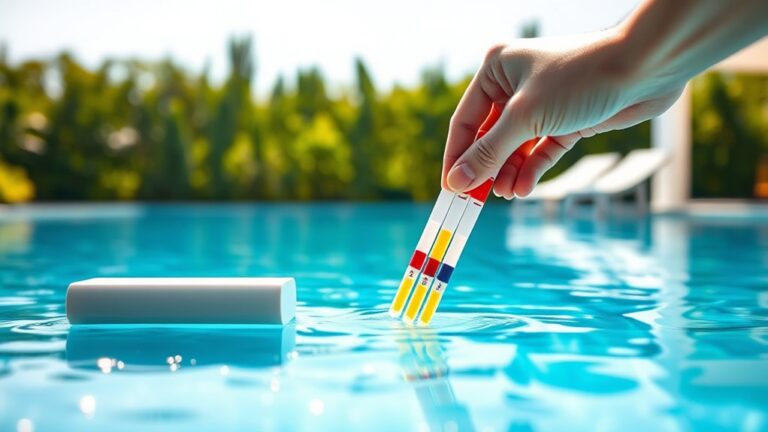
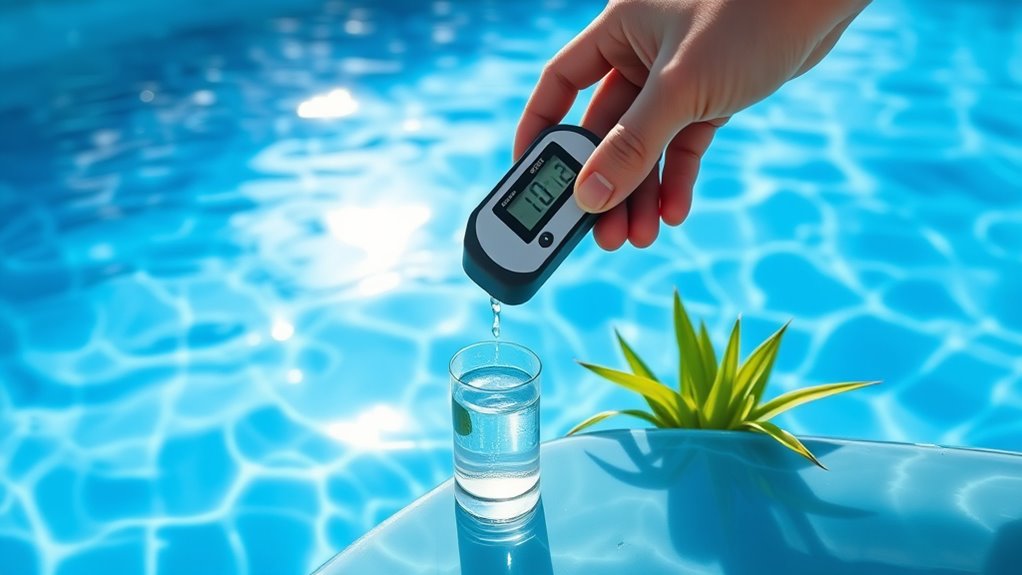
After collecting a water sample from the most suitable location, the next step involves measuring the salt concentration using a test strip or a digital meter. Test strips are dipped briefly into the sample, then removed and compared against a color chart to estimate salt levels. They offer a quick, inexpensive method but may vary in accuracy.
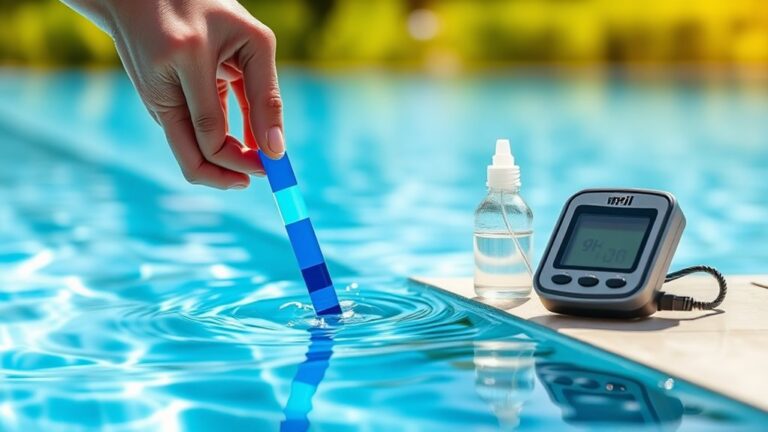
Digital meters provide a more precise reading by using electrical conductivity to determine salt concentration. These handheld devices require calibration before use and deliver results within seconds. Both tools require clean samples free from debris for accurate measurements.
Selection between test strips and digital meters depends on user preference, budget, and desired accuracy. Proper use of either method is essential for effective salt level monitoring in pools.
How to Read Your Salt Level Test Results
Interpreting salt level test results requires understanding the acceptable salt concentration ranges for pool water. Test strips display specific colors that correspond to different salt levels, indicating whether adjustments are needed. Accurately matching these colors to the provided chart guarantees proper maintenance of the pool’s salt balance.
Understanding Salt Level Ranges
Although salt level readings may vary slightly depending on the testing method, understanding the ideal ranges is essential for a healthy pool environment. Salt concentrations must be carefully monitored to ensure proper sanitation, prevent equipment damage, and maintain swimmer comfort. Generally, salt levels between 2700 and 3400 ppm (parts per million) are recommended for most saltwater pools.
Key points to consider include:
- Too low salt levels reduce chlorine generation and increase algae growth risk.
- Excessively high salt levels can corrode pool fixtures and surfaces.
- The ideal range supports efficient salt chlorine generator operation.
- Extreme fluctuations may indicate water dilution or evaporation issues.
- Consistent testing helps maintain water balance and prolong equipment life.
Accurate knowledge of these ranges enables appropriate adjustments to preserve pool water quality.
Interpreting Test Strip Colors
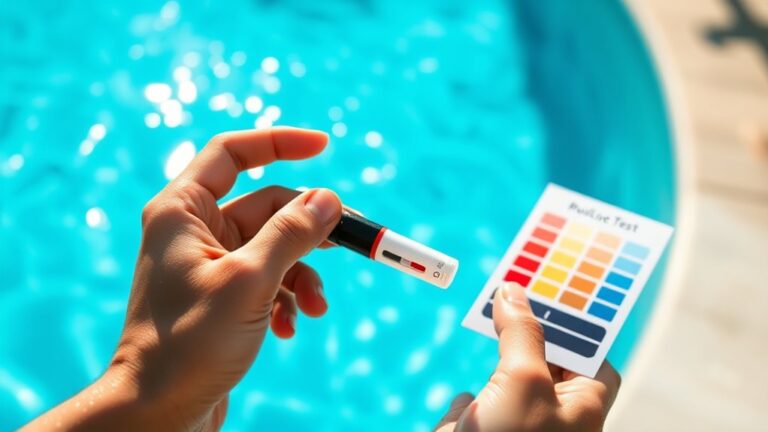
When pool owners use salt level test strips, the colors provide a clear visual indicator of the water’s salt concentration. Each strip includes a color chart that corresponds to specific salt levels, usually measured in parts per million (ppm).
After dipping the strip into the pool water and waiting the recommended time, match the color change against the chart. A color within the ideal range indicates proper salt concentration, while colors outside this range signal the need for adjustment.
Lighter colors usually indicate low salt levels, while darker or more intense colors show higher salt concentrations. Accurate interpretation ensures balanced water chemistry, promoting pool equipment longevity and swimmer comfort. Proper reading of test strip colors is essential for maintaining a safe and efficient saltwater pool system.
Adjust Salt Levels Based on Your Test Results
Maintaining the ideal salt level range is essential for peak pool performance. If levels are low, salt can be added gradually to avoid oversaturation. Conversely, excess salt may require partial water replacement to restore balance.
Ideal Salt Level Range
How can pool owners determine the most suitable salt concentration for their saltwater pools? The ideal salt level typically ranges between 2700 and 3400 ppm (parts per million), depending on the specific salt chlorine generator used. Maintaining this balance guarantees effective chlorine production and prolongs equipment life.
Key indicators of the ideal salt range include:
- Clear, sparkling water without cloudiness
- Consistent chlorine levels within recommended limits
- Proper functioning of the salt chlorine generator
- Absence of corrosion or scaling on pool surfaces and equipment
- Balanced water chemistry, including pH and alkalinity
Regular testing helps confirm the salt concentration remains within this range. This promotes pool sanitation and prevents damage.
Increasing Salt Safely
Regular testing often reveals when salt levels fall below the ideal range, prompting the need for adjustment. When this occurs, salt must be added carefully to restore balance without overshooting the target concentration.
The process begins by calculating the pool’s volume to determine the exact amount of salt required. It is essential to use high-purity pool-grade salt to avoid introducing contaminants. Salt should be distributed evenly across the water’s surface to facilitate proper dissolution.
After adding salt, the pool pump should run for several hours to circulate and mix the water thoroughly. Retesting salt levels after 24 hours confirms whether the adjustment achieved the desired concentration. Incremental additions are recommended to prevent rapid or excessive increases, ensuring pool equipment and water chemistry remain stable.
Reducing Excess Salt
When salt levels exceed the recommended range, adjustments must be made to prevent damage to pool equipment and guarantee water quality. Reducing excess salt involves diluting the pool water by partially draining and refilling it with fresh water. This method safely lowers salt concentration without harming the pool system. Careful measurement and gradual adjustment ensure the salt level returns to the ideal range.
Practical steps to reduce salt include:
- Draining a calculated portion of pool water
- Refilling with fresh, salt-free water
- Retesting salt concentration after dilution
- Repeating the process if needed in small increments
- Monitoring pool equipment for any signs of salt damage
This approach maintains a balanced, safe swimming environment while protecting pool components.
Keep Your Saltwater System Running Smoothly
Maintaining a saltwater system requires consistent monitoring and timely adjustments to guarantee peak performance. Regular testing of salt levels ensures they stay within the manufacturer’s recommended range, preventing system damage and maintaining water quality.
Consistent monitoring and salt level testing are essential for optimal saltwater system performance and water quality.
Cleaning the salt cell periodically removes calcium buildup and debris that can reduce efficiency. Inspecting and maintaining the pool’s filtration system supports proper water circulation and salt distribution.
Monitoring water chemistry beyond salt concentration—including pH, alkalinity, and stabilizer levels—helps prevent corrosion and scaling. Additionally, checking electrical connections and system components for wear reduces unexpected failures.
Following manufacturer guidelines and scheduling routine professional inspections can extend the saltwater system’s lifespan and ensure smooth operation.
Frequently Asked Questions
Can Salt Levels Affect Pool Water Clarity?
Salt levels directly impact pool water clarity. If the salt concentration is too high or too low, it disrupts the pool’s chemical balance, causing cloudy or murky water. Maintaining the correct salt levels ensures effective sanitation and prevents algae growth, which keeps the water clear. For optimal pool clarity and health, regularly test and adjust salt concentrations to the recommended range.
How Often Should I Replace My Saltwater Chlorinator Cell?
A saltwater chlorinator cell should be replaced every 3 to 5 years to maintain optimal pool sanitation. Regular inspection and consistent cleaning help prevent calcium buildup and wear that reduce efficiency. Monitor the cell’s performance and test salt levels frequently, following manufacturer guidelines for best results. Timely replacement ensures reliable operation and extends the lifespan of your chlorinator cell.
Is It Safe to Swim Immediately After Adjusting Salt Levels?
It is safe to swim immediately after adjusting salt levels only if the salt is fully dissolved and evenly distributed in the pool water. Avoid swimming right after adding salt before it has circulated, as high salt concentrations can cause skin and eye irritation. To ensure safe swimming conditions, run the pool pump for several hours to properly mix the salt throughout the pool.
Can Salt Damage Pool Equipment Over Time?
Salt can cause corrosion and damage to pool equipment over time if not properly managed. Metal components like heaters, pumps, and ladders are especially susceptible to salt-induced corrosion. To protect your pool equipment, use corrosion-resistant materials such as titanium or stainless steel and perform regular maintenance. Maintaining proper salt levels and balanced water chemistry is essential to prolong equipment lifespan and prevent premature wear from salt exposure.
What Are the Signs of Low Salt Levels Besides Testing?
Low salt levels in saltwater pools can cause several noticeable signs before testing is done. Common indicators include cloudy or greenish water, which results from poor sanitization, and increased algae growth. You might also detect a strong chlorine smell, as the system overcompensates for low salt by producing excess chlorine. Swimmers often experience eye or skin irritation. Additionally, pool equipment may display error codes or struggle to generate chlorine efficiently. Recognizing these symptoms early can help you adjust salt levels promptly to maintain a healthy pool.
Conclusion
Maintaining the correct salt level in a pool is as vital as the sun is to the sky. By following these simple steps, pool owners can guarantee their water remains balanced and inviting.
Accurate testing with reliable tools prevents costly damage and keeps the saltwater system running smoothly. Regular monitoring and adjustments assure an invigorating swim every time.
This approach makes pool care effortless and enjoyable rather than an intimidating chore. Consistency truly is the secret to sparkling success.