How to Use Pool Test Strips in 7 Easy Steps
To use pool test strips in 7 easy steps, gather your strips and keep them sealed. Store them in a cool, dry place.
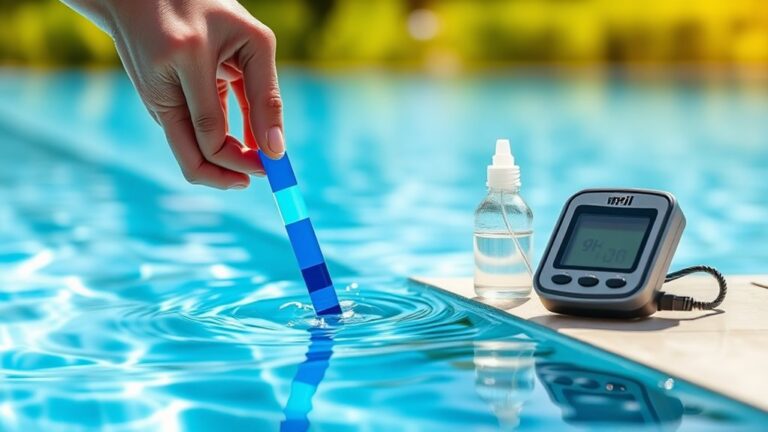
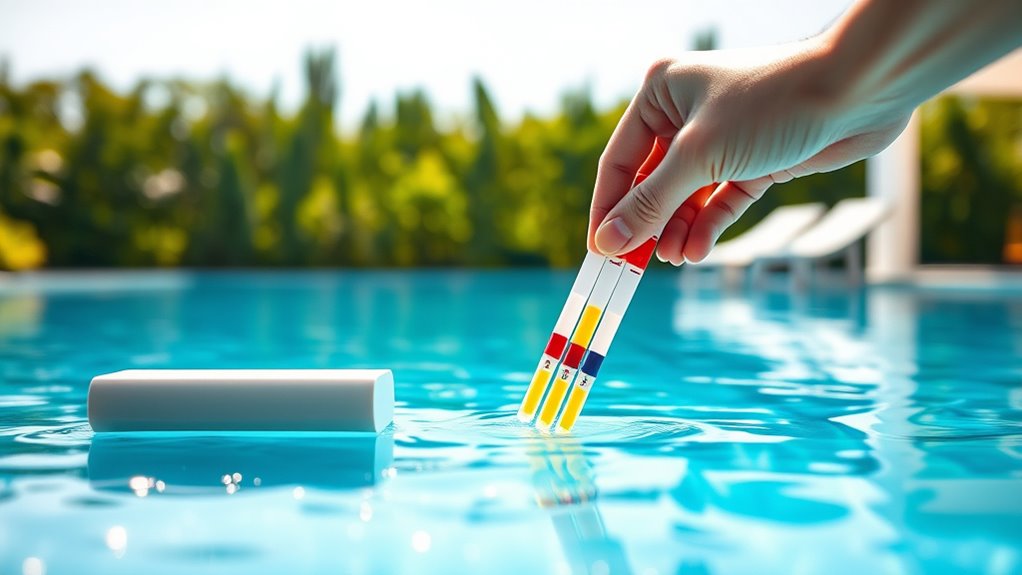
Dip a strip fully under the water for 2-3 seconds without touching it with your fingers. Then hold it horizontally.
Wait 15-30 seconds before comparing the colors to the chart in good lighting.
Check your pool’s pH, chlorine, and alkalinity levels. Adjust chemicals as needed to keep water safe and clear.
Keep going to discover tips for perfect pool care.
Why Testing Pool Water With Test Strips Matters
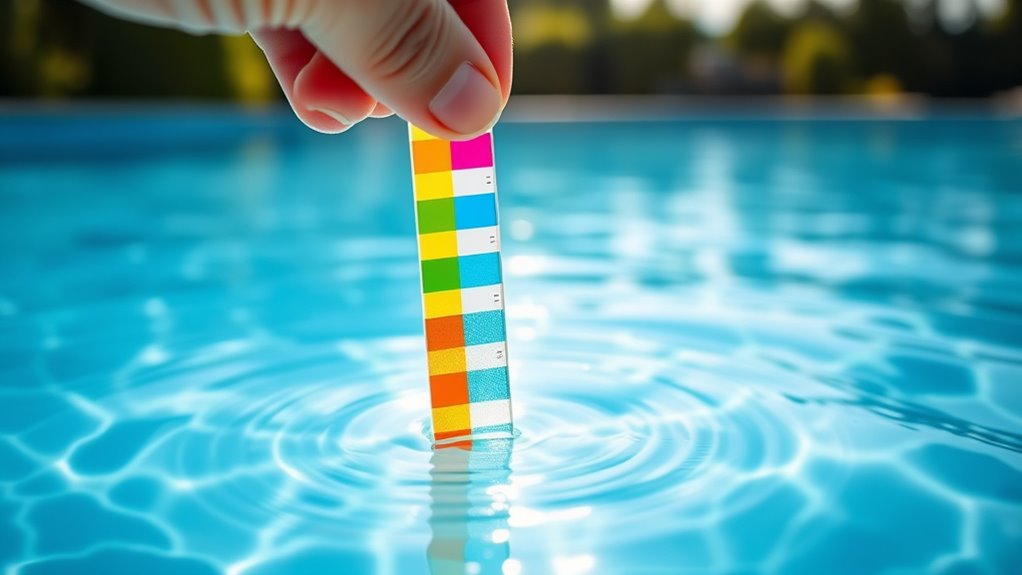
Although it might seem simple, testing your pool water with test strips is essential for keeping it safe and clean. You rely on those strips to quickly check crucial factors like pH, chlorine, and alkalinity. If these levels aren’t balanced, you risk algae growth, cloudy water, or even skin irritation. By regularly testing, you catch problems early, avoiding costly repairs or health hazards. Plus, accurate readings help you use chemicals efficiently, saving money and protecting the environment. Skipping tests might lead you to guess what your pool needs, but that’s risky. Using test strips gives you a straightforward, reliable way to maintain crystal-clear water and a healthy swimming environment every time you explore.
Gather and Store Pool Test Strip Supplies Properly
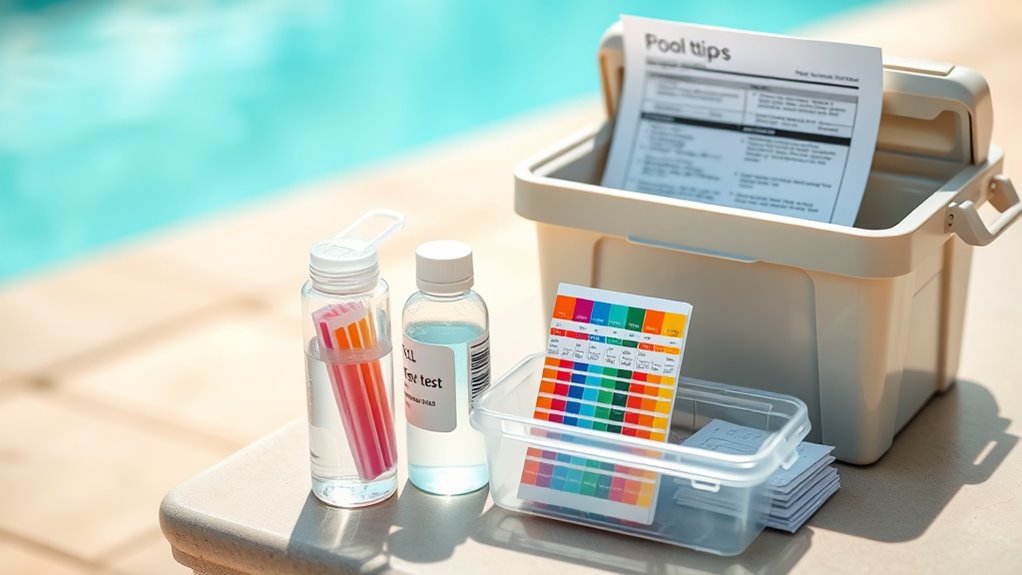
Before you start testing, make sure you have all the essential pool test supplies on hand, like test strips, a clean container, and a timer. Store your test strips in a cool, dry place away from sunlight to keep them accurate. Proper storage helps guarantee your readings stay reliable every time you check your pool.
Essential Pool Test Supplies
When you start testing your pool water, you’ll need a few essential supplies to get accurate results. First, get a reliable pack of pool test strips designed to measure pH, chlorine, alkalinity, and hardness levels. Keep a clean container handy to dip the strip without contaminating it. Have a timer or stopwatch nearby to ensure you read the strip at the correct time, usually within 15 to 30 seconds. It’s also helpful to have a notepad or a digital device ready to record your test results for tracking changes over time. Ultimately, always keep your hands clean and dry before handling test strips to avoid affecting the chemical readings. Gathering these supplies sets you up for precise and effective pool water testing.
Proper Storage Techniques
Since pool test strips are sensitive to moisture, light, and air, you need to store them properly to maintain their accuracy. Keep the strips in their original container with the lid tightly sealed to prevent exposure. Store the container in a cool, dry place away from direct sunlight, like a cabinet or drawer. Avoid humid areas such as bathrooms or near the pool itself, as moisture can degrade the strips. Don’t transfer strips to other containers, as this can introduce contaminants. Also, avoid handling strips with wet or dirty hands to prevent false readings. Always check the expiration date before use, and discard any strips that appear discolored or damaged. Proper storage guarantees your pool tests remain reliable for safe swimming.
Dip Pool Test Strips Correctly in Water
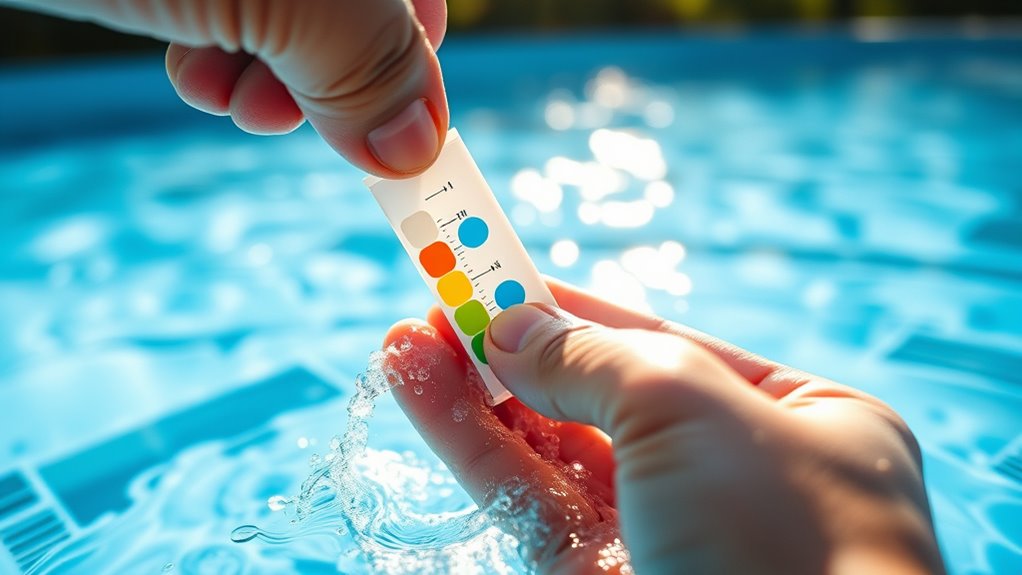
When you dip your pool test strip, make sure to submerge it fully but briefly to get an accurate reading. Avoid touching the strip’s pads with your fingers to prevent contamination. Timing is key—follow the instructions closely to guarantee the results are reliable.
Proper Strip Immersion
Although it might seem simple, dipping pool test strips correctly is essential for accurate results. When you immerse the strip, fully submerge the test pads in the water for just a second or two—usually around 2-3 seconds—to allow proper contact without saturating the strip. Avoid dipping it too briefly, as this won’t activate the chemicals properly, or too long, which can cause bleeding and inaccurate readings. Hold the strip horizontally when pulling it out to prevent the chemicals on the pads from mixing. Also, dip the strip in the water at least 18 inches below the surface to get a representative sample free from surface contaminants. Following these steps guarantees your test strip reflects your pool’s true water chemistry every time.
Avoiding Contamination Risks
To get accurate readings, you need to avoid contaminating your pool test strips during dipping. Always handle the strips by the edges to prevent oils or dirt from your fingers affecting the results. Don’t touch the test pads themselves. When dipping, immerse the strip fully but only briefly, ensuring it contacts clean pool water—not surface debris or pool walls. Avoid dipping the strip multiple times or shaking it in the water, as this can introduce contaminants or dilute the chemicals on the strip. Also, don’t let the strip touch other surfaces before or after testing. Using a clean container with pool water is a good alternative when testing away from the pool. These steps help keep your readings reliable and your pool care on track.
Timing for Accurate Results
Since the accuracy of your pool test strip results depends heavily on timing, you’ll need to dip the strip correctly and read it within the recommended timeframe. First, immerse the strip fully in the pool water for the exact number of seconds specified by the manufacturer—usually just a few seconds. Avoid leaving it submerged too long, as this can skew the results. After dipping, hold the strip horizontally to prevent colors from bleeding between pads. Start the timer immediately and compare the colors at the precise time indicated on the instructions, typically between 15 to 30 seconds. Reading too early or too late can lead to inaccurate chemical levels, so timing is key to maintaining a safe, balanced pool.
Wait the Recommended Time Before Reading Results
When you dip a pool test strip into the water, you’ll need to wait the recommended time before reading the results to guarantee accuracy. This waiting period allows the chemicals on the strip to react fully with the water, giving you a reliable reading. Here’s how to handle this step:
- Check the instructions on your test strip packaging for the exact wait time.
- Use a timer or stopwatch to avoid guessing or rushing.
- Hold the strip steady and avoid shaking or dripping excess water off too quickly.
- Wait patiently—reading too early or too late can cause inaccurate or misleading results.
Following these steps assures you get the most precise data about your pool’s chemical balance every time.
Compare Pool Test Strip Colors to the Chart
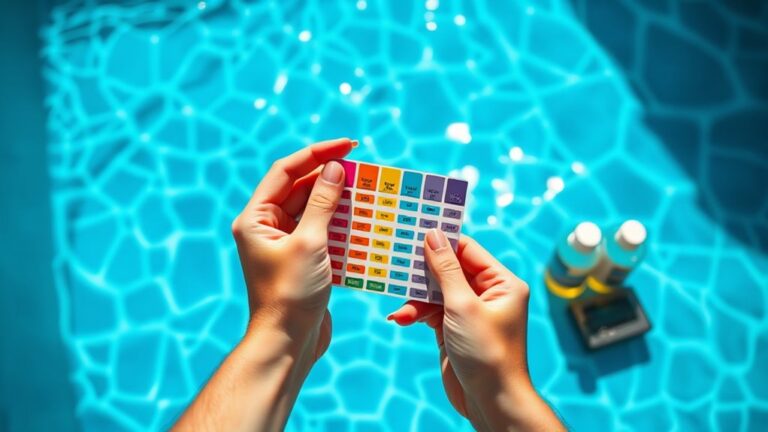
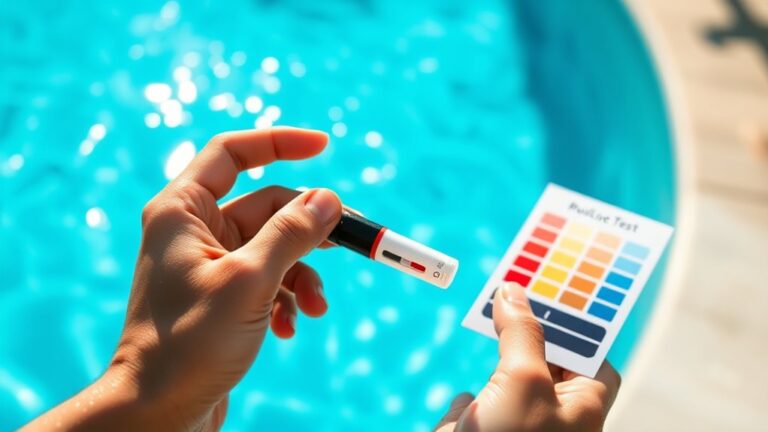
Although you’ve waited the recommended time, your work isn’t done yet—you’ll need to compare the colors on your pool test strip directly to the chart provided. Hold the strip next to the chart in good lighting to see the colors clearly. Match each colored pad on the strip with the closest color on the chart. It’s important to do this quickly, as some colors may change after a minute or two. Take your time to verify each color matches accurately since this step determines how you’ll manage your pool’s chemistry. Avoid guessing or relying on memory; always compare the strip side by side with the chart. This way, you’ll get clear and reliable readings to help maintain your pool properly.
Check Your Pool’s Chemical Levels and What They Mean
After matching your pool test strip colors to the chart, you can interpret what those results mean for your pool’s chemical balance. Understanding these levels helps you maintain a safe and clean swimming environment. Here’s what to look for:
- pH Level: Ideal is 7.2 to 7.8. Too low causes corrosion; too high leads to scaling.
- Chlorine: Should be 1-3 ppm to effectively kill bacteria and algae.
- Alkalinity: Aim for 80-120 ppm to stabilize pH and prevent fluctuations.
- Cyanuric Acid: Keep between 30-50 ppm to protect chlorine from sunlight degradation.
Knowing these numbers means you can quickly spot issues before they affect water quality or swimmer comfort. Keep your strips handy and test regularly!
Adjust Pool Chemicals to Fix Common Problems
Since maintaining the right chemical balance is essential, you’ll need to adjust your pool chemicals promptly to fix common problems like cloudy water, algae growth, or skin irritation. Use your test strip results to identify which chemicals need tweaking. For example, low chlorine can cause algae, while high pH can lead to cloudy water and irritation. Here’s a quick guide to help you adjust:
| Problem | Cause | Chemical Adjustment |
|---|---|---|
| Cloudy Water | High pH or low chlorine | Add pH reducer or chlorine |
| Algae Growth | Low chlorine | Shock pool with chlorine |
| Skin Irritation | High pH or chlorine | Balance pH, reduce chlorine |
| Scale Buildup | High calcium hardness | Add scale inhibitor |
Following these steps keeps your pool clear, safe, and comfortable.
Frequently Asked Questions
How Often Should I Replace Expired Pool Test Strips?
You should replace expired pool test strips immediately to ensure accurate water testing. Using expired strips can result in incorrect readings, leading to improper pool chemical balance and potential water quality issues. Always check the expiration date before use, and discard any strips that are past their date. Regularly replacing your pool test strips guarantees reliable results and helps maintain a safe, clean swimming environment.
Can Pool Test Strips Detect Bacteria or Algae?
No, pool test strips cannot directly detect bacteria or algae. Instead, they measure chemical levels such as chlorine, pH, and alkalinity, which help maintain balanced water to prevent bacteria and algae growth. Signs like cloudy water or a green tint may indicate algae presence, but confirming bacteria or algae requires specific tests or professional kits. Using test strips to keep chemical levels in check is essential for avoiding these issues.
Are Pool Test Strips Safe for Saltwater Pools?
Yes, pool test strips are safe for saltwater pools. They accurately measure essential water parameters such as pH, chlorine, and alkalinity, which are crucial for maintaining a balanced saltwater system. To ensure accurate results, use test strips specifically labeled for saltwater pools or those that include tests for key saltwater parameters. Regular testing with these strips helps keep your saltwater pool clean, safe, and properly balanced.
How Do Temperature Fluctuations Affect Test Strip Accuracy?
Temperature fluctuations impact test strip accuracy because the chemical reactions on the strip require stable conditions. Testing water that is too cold or too hot can produce inaccurate readings. For best results, test your pool water when the temperature is between 50°F and 90°F. Testing outside this range may lead to incorrect data, causing improper pool care and water imbalance.
Can I Use Pool Test Strips for Hot Tubs?
Can You Use Pool Test Strips for Hot Tubs?
While pool test strips can be used in hot tubs, they are not always reliable due to the higher temperatures and unique chemical balances in hot tubs. For accurate water testing and proper maintenance, it’s best to use test strips specifically designed for hot tubs. Using the right strips ensures precise readings, helping you keep your hot tub water safe, clean, and balanced with confidence.
Conclusion
Now that you know why testing matters, how to dip strips properly, when to wait, how to compare colors, and what to do next, you’re ready to keep your pool safe and sparkling. Test regularly, read carefully, adjust wisely, and enjoy confidently.
By following these simple steps, you’ll maintain balanced water, prevent damage, and guarantee a revitalizing swim every time. Stay consistent, stay informed, and keep your pool perfect!