How to Balance Pool Water in 7 Easy Steps
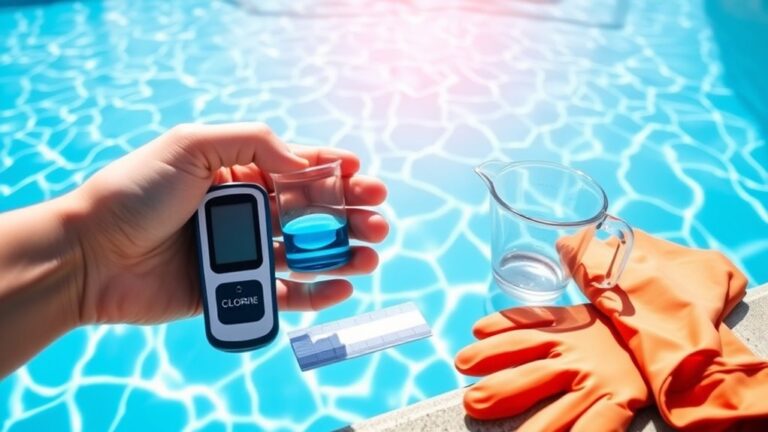
To balance your pool water in 7 easy steps, start by testing it twice a week to spot any chemical imbalances.
Adjust the pH to stay between 7.2 and 7.6.
Then balance alkalinity within 80-120 ppm to stabilize pH levels.
Set calcium hardness between 200-400 ppm to protect surfaces.
Use chlorine safely to keep the water sanitized.
Shock the pool when needed, and maintain regular cleaning.
Keep these basics in mind, and you’ll guarantee a revitalizing swim every time.
More tips await to help you maintain perfect water quality.
Test Your Pool Water to Identify Chemical Imbalances
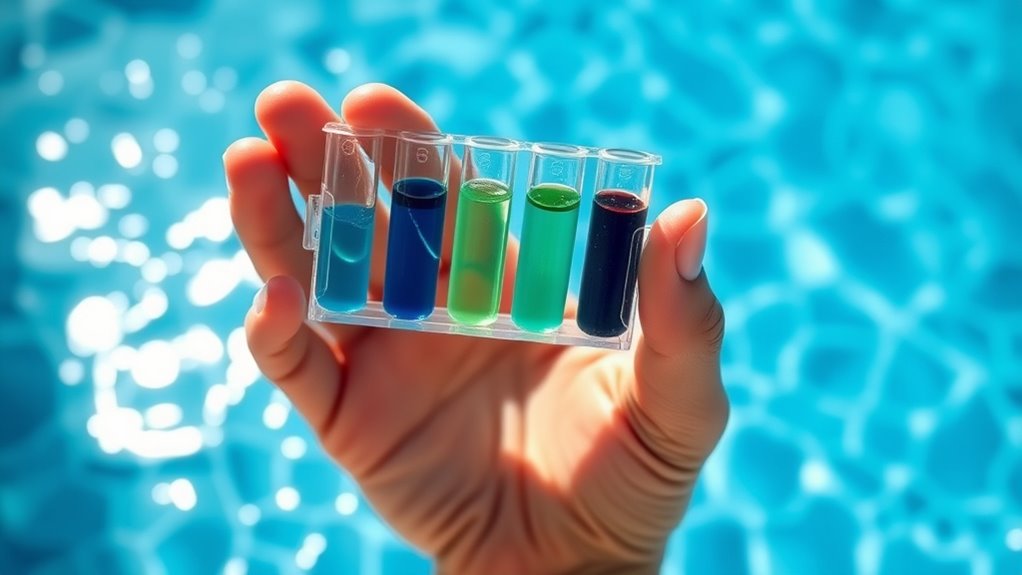
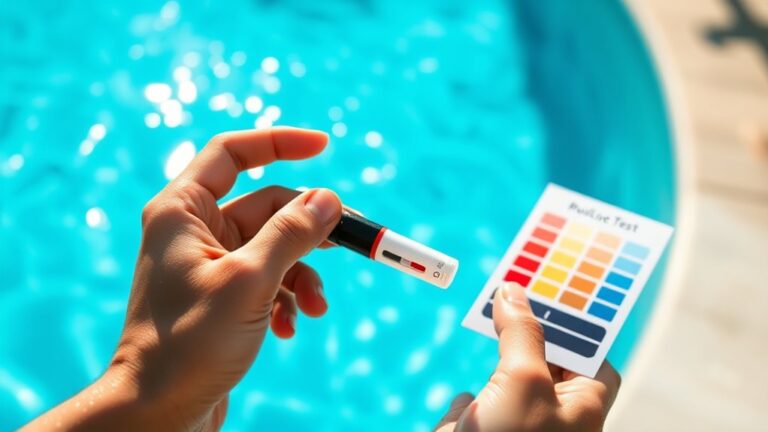
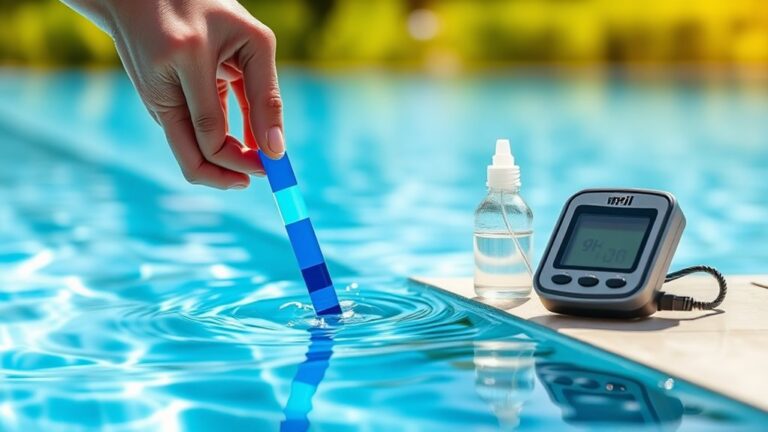
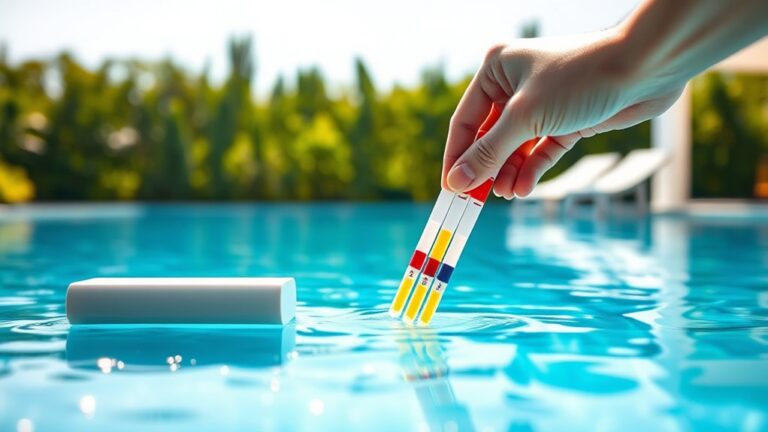
How often should you test your pool water? Ideally, you should check it at least twice a week, especially during heavy use or hot weather. Testing helps you spot chemical imbalances before they cause issues like algae growth or skin irritation. Use a reliable test kit or digital tester to measure key factors like chlorine, alkalinity, and calcium hardness. Taking a sample from elbow-deep water, away from jets and skimmers, guarantees accuracy. Regular testing lets you track changes and react quickly, keeping your pool safe and inviting. Don’t wait until the water looks cloudy or smells off; proactive testing saves time and money by preventing bigger problems. Staying on top of your pool’s chemistry keeps it sparkling and comfortable all season long.
Adjust PH Levels for Clear, Comfortable Pool Water
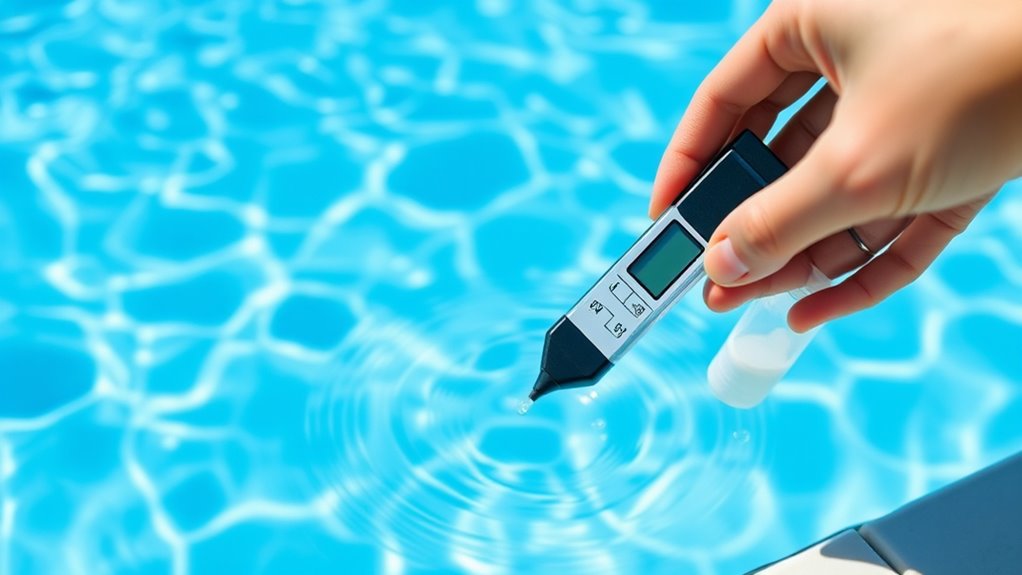
Once you’ve tested your pool water and identified any chemical imbalances, the next step is to adjust the pH levels. The pH scale runs from 0 to 14, with 7 being neutral. For pools, you want to keep the pH between 7.2 and 7.6. If the pH is too low, your water becomes acidic, causing irritation to skin and eyes and potentially damaging pool surfaces. If it’s too high, water turns cloudy, and chlorine becomes less effective. To raise pH, add soda ash (sodium carbonate); to lower it, use muriatic acid or sodium bisulfate. Always add chemicals gradually, retesting after an hour or so. Maintaining proper pH guarantees clear, comfortable water and protects your pool’s longevity.
Balance Alkalinity to Protect Your Pool and Equipment
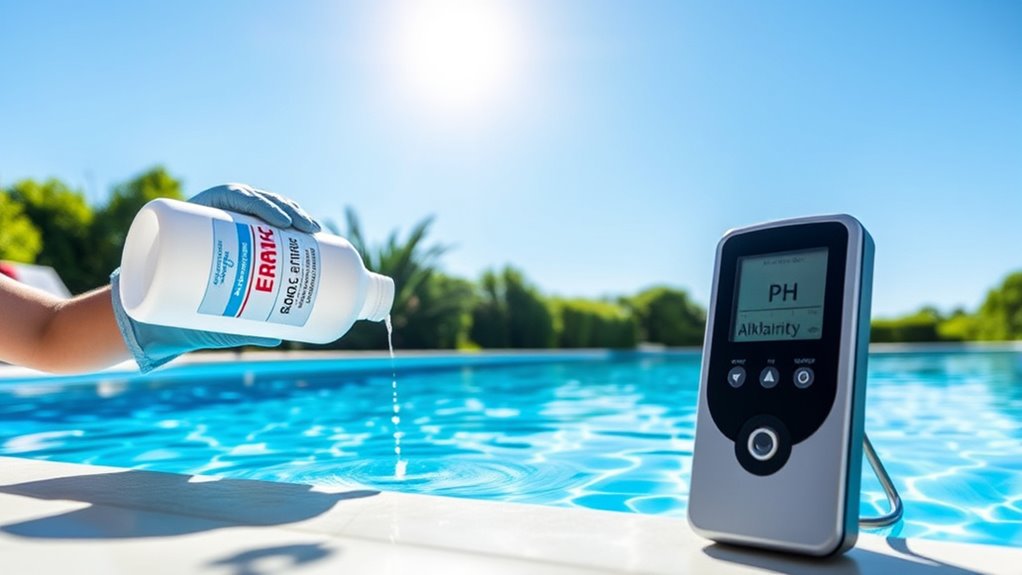
You’ll want to keep your pool’s alkalinity between 80 and 120 ppm to protect both the water and your equipment. If alkalinity is off, it can cause corrosion or scaling, which damages surfaces and gear. Fortunately, you can adjust alkalinity easily using common pool chemicals to maintain the right balance.
Ideal Alkalinity Range
Although maintaining proper alkalinity might seem less critical than balancing pH, it plays a vital role in protecting your pool and equipment. The ideal alkalinity range for most pools is between 80 and 120 parts per million (ppm). Keeping it within this range stabilizes your pH levels, preventing sudden fluctuations that can damage surfaces and corrode metal components. To measure alkalinity, use a reliable test kit regularly, especially after heavy rain or chemical adjustments. If alkalinity falls below 80 ppm, add alkalinity increaser products to raise it safely. If it climbs above 120 ppm, use a pH reducer or dilute with fresh water. Staying within this range ensures your pool water stays balanced, safeguarding both your investment and your swimming experience.
Effects of Imbalanced Alkalinity
Why does maintaining proper alkalinity matter so much for your pool? When alkalinity is off balance, you risk damaging your pool and equipment. Low alkalinity makes your water acidic, which can corrode metal parts like ladders, heaters, and pumps, leading to costly repairs. Acidic water also irritates swimmers’ skin and eyes. On the other hand, high alkalinity causes cloudy water and scale buildup on surfaces and equipment, reducing efficiency and making your pool look uninviting. It can also interfere with sanitizer effectiveness, making it harder to keep your pool clean. By keeping alkalinity within the ideal range, you protect your investment, ensure clear water, and create a safe, comfortable swimming environment for everyone.
Adjusting Alkalinity Levels
How do you quickly restore the perfect alkalinity balance in your pool? Start by testing your water’s total alkalinity with a reliable kit. If the alkalinity is low (below 80 ppm), add sodium bicarbonate in small increments, about 1.5 pounds per 10,000 gallons, then retest after a few hours. To lower high alkalinity (above 120 ppm), carefully add muriatic acid or sodium bisulfate, following product instructions and adding it slowly to avoid shocking your pool. Always circulate your pool water after adjustments to distribute chemicals evenly. Keep your alkalinity between 80 and 120 ppm to protect your pool’s surfaces and equipment from corrosion or scaling. Regularly monitoring and adjusting alkalinity helps maintain balanced water chemistry and extends the life of your pool system.
Set Calcium Hardness to Prevent Corrosion and Scaling
When you set the calcium hardness in your pool correctly, you protect its surfaces and equipment from damage. Calcium hardness refers to the amount of dissolved calcium in your water. Too low, and corrosion can eat away at pool plaster and metal parts. Too high, and scaling can form, creating rough surfaces and clogging filters.
To balance calcium hardness, follow these steps:
- Test your pool water using a reliable calcium hardness test kit to know your starting point.
- If levels are low (below 200 ppm), add calcium chloride gradually to raise hardness safely.
- If levels are too high (above 400 ppm), dilute the water by partially draining and refilling with fresh water.
Maintaining proper calcium hardness keeps your pool durable and enjoyable.
Use Chlorine Safely for Clean Pool Water
Balancing calcium hardness helps protect your pool’s surfaces, but keeping the water clean requires careful use of chlorine. You need to maintain chlorine levels between 1-3 ppm to kill germs effectively without irritating swimmers. Always add chlorine in a well-ventilated area and store it away from heat or sunlight. Avoid mixing different chlorine types to prevent dangerous chemical reactions. Test your pool water regularly to guarantee safe and effective chlorine levels.
| Chlorine Type | Use Tips |
|---|---|
| Liquid | Add directly, fast acting |
| Granular | Dissolve before adding |
| Tablets | Use in floaters or feeders |
| Stabilized | Protects from sun breakdown |
| Unstabilized | Use for shock treatments |
Following these steps helps you keep your pool sparkling and safe.
How and When to Shock Your Pool for Quick Sanitizing
If your pool water looks cloudy or has a strong chlorine smell, it’s time to shock your pool to quickly eliminate contaminants and restore clarity. Shocking involves adding a high dose of chlorine or non-chlorine shock to kill bacteria, algae, and organic waste that regular chlorine might miss. To shock your pool effectively:
- Test the water first; adjust pH between 7.2 and 7.6 for best results.
- Add shock treatment in the evening or at night to prevent UV from breaking down the chemicals.
- Run your pool pump for at least 8 hours after shocking to circulate the chemicals evenly.
Avoid swimming until chlorine levels drop below 3 ppm for safety. Regular shocking keeps your pool sanitized and inviting.
Regularly Clean and Maintain Your Pool to Keep Water Balanced
Maintaining clear, safe pool water goes beyond just shocking—it requires regular cleaning and upkeep. You need to skim debris daily, brush pool walls weekly, and vacuum the floor to prevent algae buildup. Don’t forget to clean filters regularly to keep water flowing smoothly. Consistent maintenance balances water chemistry and prevents costly repairs.
| Task | Frequency | Purpose |
|---|---|---|
| Skimming | Daily | Remove leaves, bugs, and debris |
| Brushing | Weekly | Prevent algae on walls |
| Vacuuming | Weekly | Clean pool floor |
| Filter Cleaning | Biweekly | Maintain water circulation |
Stick to this routine, and you’ll keep your pool water balanced and inviting all season long.
Frequently Asked Questions
What Is the Ideal Water Temperature for a Swimming Pool?
The ideal swimming pool temperature is between 78°F and 82°F. This range provides a comfortable and refreshing swim without shocking your body. For a warmer, cozier experience, you can raise the temperature up to 84°F, but going higher may feel more like a hot bath and reduce the invigorating effect. Maintaining your pool within this temperature range ensures an enjoyable swim every time.
How Often Should Pool Filters Be Replaced?
Pool filters should be replaced based on their type and usage. Cartridge filters generally last about 1 to 2 years, while sand filters can last 5 to 7 years. However, the sand inside sand filters needs to be replaced every 3 to 5 years. Monitor your pool’s water clarity and flow rate regularly—if you notice a decline, it’s time to clean or replace your filter to maintain optimal performance.
Can Rainwater Affect My Pool’s Chemical Balance?
Rainwater can impact your pool’s chemical balance because it is slightly acidic and may contain impurities. When rain enters your pool, it can lower the pH and chlorine levels, disrupting the water’s balance. To maintain clean and safe swimming conditions, always test your pool water after heavy rain and adjust the chemicals as needed. Regular monitoring helps prevent water quality issues caused by rainwater.
Are Saltwater Pools Easier to Maintain Than Chlorine Pools?
Saltwater pools are generally easier to maintain than traditional chlorine pools because they generate chlorine automatically using a salt chlorine generator. This means you don’t need to add chlorine manually as often, saving you time and effort. However, regular monitoring of pH and salt levels is still necessary to keep the water balanced. While saltwater pools require less frequent chemical adjustments, they are not completely maintenance-free, so consistent care is essential for optimal pool health.
What Safety Gear Is Recommended When Handling Pool Chemicals?
When handling pool chemicals, always prioritize safety by wearing chemical-resistant gloves, protective goggles, and a mask to avoid inhaling harmful fumes. Additionally, wear long sleeves and closed-toe shoes to protect your skin from splashes and spills. These essential safety measures prevent direct contact with corrosive substances, ensuring safe and confident handling of pool chemicals every time. Never skip this protective gear to maintain your health and safety.
Conclusion
Balancing your pool water isn’t as tricky as it seems. You can conquer it in seven simple steps! By testing your water and adjusting pH and alkalinity, you keep it safe and clean.
Manage calcium hardness and use chlorine wisely to maintain water quality. Shock the pool when needed and keep it clean for the best results. Follow these tips, and your pool will have crystal-clear water that feels like a private oasis. Plunge in and keep your water flawless!