

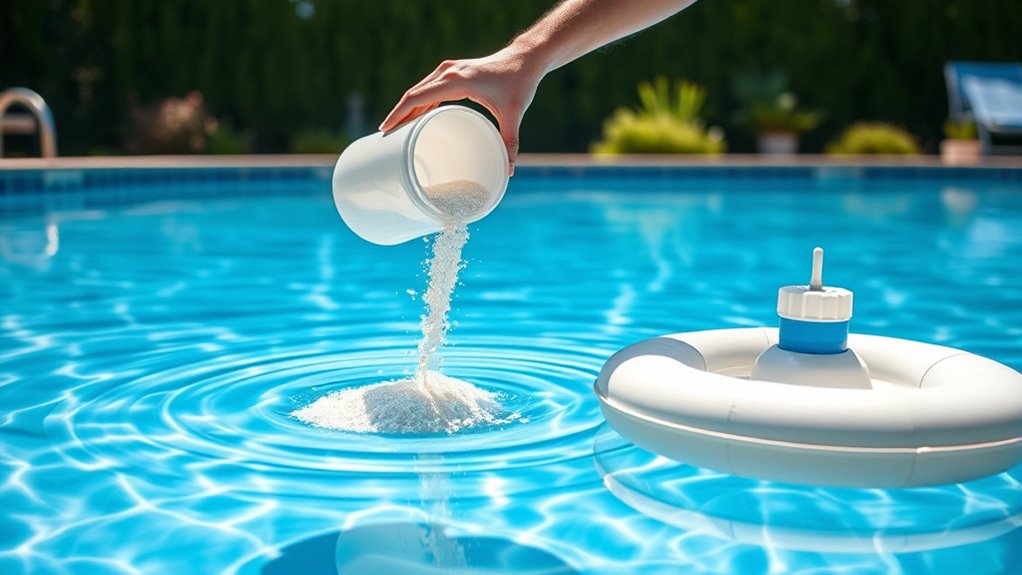
Shocking your pool is an essential maintenance task that helps eliminate contaminants, algae, and bacteria, ensuring clean and clear water. To do this effectively, timing and preparation are key.
The best time to shock your pool is in the evening when the weather is calm, and the water temperature ranges between 70°F and 85°F. Before you begin, gather your pool shock product along with protective gear such as gloves and goggles to keep yourself safe.
It’s important to test and balance your pool water’s pH and chlorine levels to maximize the effectiveness of the shock treatment. Once you know the size of your pool, calculate the correct amount of shock needed, then apply it evenly around the pool’s perimeter.
Immediately after application, run your pool pump continuously for at least 8 hours to circulate the chemicals thoroughly. Always wait until chlorine levels return to safe limits before swimming.
In this article, I will explain how to shock your pool in 7 easy steps for perfect results and crystal-clear water.
What Is Pool Shocking and Why It Matters
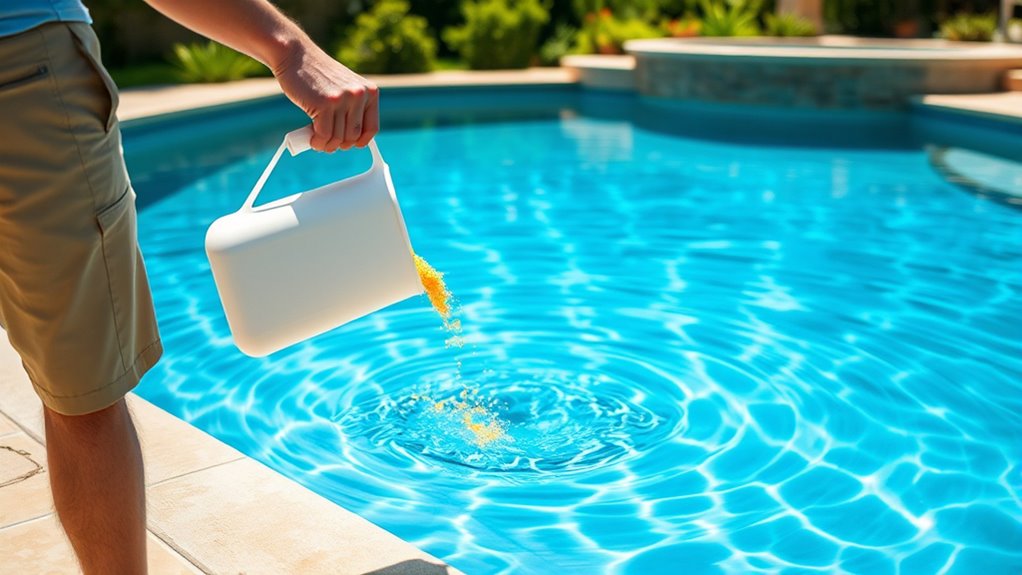
Pool shocking is a powerful way to quickly kill bacteria, algae, and other contaminants in your water. When you shock your pool, you add a high dose of chlorine or non-chlorine chemicals to sanitize and refresh the water. This process helps restore clarity, eliminate unpleasant odors, and prevent the spread of harmful microorganisms.
Shocking is essential after heavy pool use, rainstorms, or when you notice cloudy water or algae growth. It also breaks down combined chlorine compounds, known as chloramines, which can irritate your eyes and skin. By regularly shocking your pool, you maintain a safe and inviting swimming environment.
You’ll find that this simple step keeps your water clean and balanced, making pool maintenance much easier in the long run.
Choose the Best Time and Weather to Shock Your Pool
You’ll want to shock your pool when the temperature is between 70 and 90 degrees for the best results. Avoid windy days to prevent the shock from blowing away and losing effectiveness. The ideal time is usually in the evening or early morning when the sun isn’t strong.
Ideal Temperature Range
When’s the best time to shock your pool for ideal results? Aim for water temperatures between 70°F and 85°F (21°C to 29°C). This range guarantees the chlorine works effectively without stressing your pool’s ecosystem.
If the water’s too cold, the chlorine won’t react properly, making the shock less effective. On the other hand, shocking when it’s too hot can cause chlorine to dissipate quickly, wasting product and money.
Early evening is a great time since temperatures start to drop, and the sun’s UV rays won’t break down the chlorine immediately. Keep an eye on the thermometer before you shock, and avoid doing it during extreme temperature swings to maintain consistent, safe water chemistry.
Avoid Windy Conditions
Although it might seem tempting to shock your pool on a breezy day, windy conditions can cause chlorine to disperse unevenly and reduce its effectiveness. When wind blows, chemicals don’t settle uniformly, leaving some areas under-treated and others over-chlorinated. This imbalance can lead to cloudy water or algae growth.
To prevent this, pick days with calm weather. Here’s what you should do:
- Check the weather forecast for low wind speeds before shocking your pool.
- Choose a day when the air is still to ensure even chemical distribution.
- Avoid windy afternoons or any time gusts are expected to prevent chlorine loss.
Best Time Of Day
What’s the best time to shock your pool for maximum effectiveness? Early evening is ideal. When the sun starts to set, chlorine won’t break down as quickly from UV rays, allowing it to work longer and kill bacteria effectively.
Avoid shocking your pool during the heat of the day, as strong sunlight can reduce chlorine’s power. Also, pick a calm day without wind to prevent chemicals from blowing away or uneven distribution.
Make sure the temperature is moderate. Extremely cold or hot weather can affect how well the shock works.
Gather Pool Shock Supplies You’ll Need
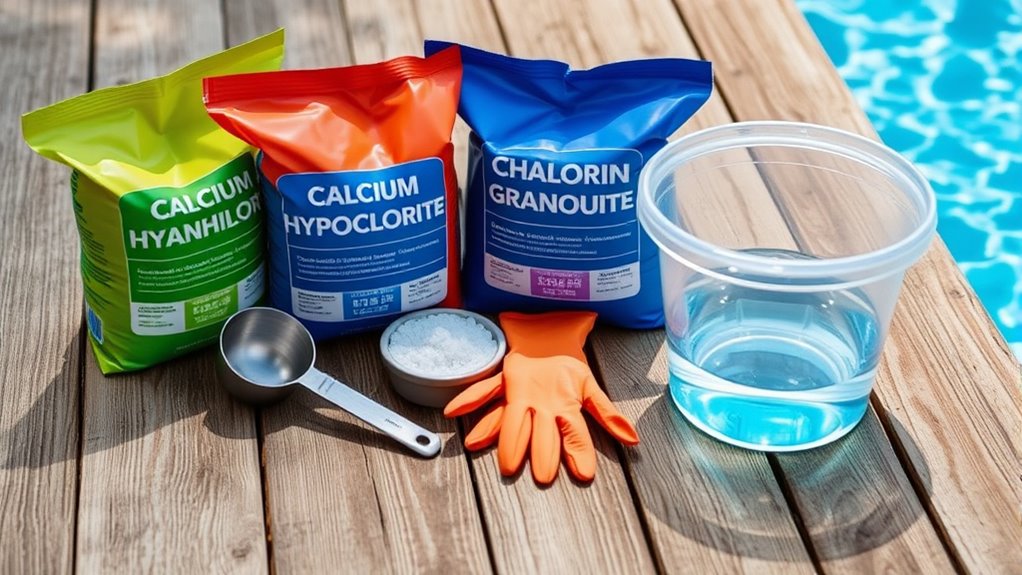
Before you start shocking your pool, gather all necessary supplies to make the process smooth and effective. Having everything ready ensures you won’t stop midway or risk improper treatment.
Gather all necessary supplies before shocking your pool to ensure a smooth, safe, and effective process.
Here’s what you’ll need:
- Pool Shock Product – Choose a chlorine-based shock that suits your pool type and size. Granular or liquid forms work well.
- Protective Gear – Gloves and safety goggles protect your skin and eyes from harsh chemicals.
- Measuring and Mixing Tools – Use a bucket to dissolve the shock if required and a stirring stick to mix it evenly before adding to the pool.
With these supplies on hand, you’ll be ready to shock your pool efficiently and safely.
Test and Balance Your Pool Water First
Before you shock your pool, test your water to check the pH levels and chlorine amount. You’ll also want to measure and adjust the alkalinity balance. Getting these right guarantees the shock works effectively and keeps your pool safe.
Check pH Levels
How do you know if your pool water is ready for shocking? The key is checking the pH levels first. Proper pH ensures the shock works effectively and protects your pool equipment.
Use a reliable test kit or digital tester to measure the pH. Ideally, it should be between 7.2 and 7.6 for best results. Here’s what you should do:
- Test your pool water’s pH with a kit or digital tester.
- If the pH is too high (above 7.6), add a pH reducer to bring it down.
- If the pH is too low (below 7.2), add a pH increaser to raise it.
Balancing pH before shocking prevents irritation and maximizes chlorine’s effectiveness.
Measure Chlorine Amount
After balancing your pool’s pH, the next step is to measure the chlorine level to guarantee your shock treatment will be effective. Use a reliable pool test kit or strips to check the current chlorine concentration.
Aim for a free chlorine level between 1 and 3 ppm before shocking. If chlorine is too high, wait until it drops to this range to avoid over-chlorination. If it’s too low, your shock won’t work efficiently, allowing contaminants to persist.
Record your readings and compare them to recommended levels on your shock product’s label. Accurate measurement ensures you add the right amount of shock, protecting your pool from algae and bacteria. Testing chlorine first helps you shock safely and maintain crystal-clear water.
Adjust Alkalinity Balance
Since your pool’s alkalinity directly affects pH stability, you need to test and adjust it before shocking. Alkalinity acts as a buffer, preventing sudden pH changes. These changes could reduce shock effectiveness or irritate swimmers.
Start by using a reliable pool test kit to measure total alkalinity. Ideal levels range between 80-120 ppm.
If your alkalinity is off, follow these steps:
- To raise alkalinity, add sodium bicarbonate (baking soda) gradually.
- To lower alkalinity, use muriatic acid or sodium bisulfate carefully.
- Retest after adjustments and wait a few hours before proceeding to shock.
Balancing alkalinity guarantees your shock treatment works efficiently. It also keeps your pool water safe and comfortable.
Calculate the Right Shock Amount for Your Pool
Before you add any shock to your pool, determine the correct amount based on your pool’s size and current water conditions. Start by measuring your pool’s volume in gallons. This information is usually in your pool manual or available online.
Next, check the chlorine demand by testing your water’s chlorine level and clarity. If your pool is heavily used or shows signs of algae, you will need more shock. Follow the shock product’s label instructions, which typically specify how many ounces or pounds to add per 10,000 gallons.
For example, if your pool holds 20,000 gallons, double the recommended amount. Using too little won’t effectively sanitize, while too much can cause irritation. Calculating accurately guarantees your pool stays clean and safe without wasting product.
Apply Shock Evenly and Safely Around Your Pool
Calculating the right amount of shock sets you up for success, but how you apply it greatly affects its effectiveness. To guarantee your pool gets the full benefit, follow these steps for even and safe application:
- Distribute in sections: Walk around your pool and sprinkle the shock evenly. Focus on areas with poor circulation.
- Avoid direct contact: Never throw shock directly into the skimmer or in one concentrated spot. This prevents damage to your equipment and pool surfaces.
- Wear protective gear: Gloves and goggles protect you from irritation. Always handle chemicals in a well-ventilated area.
Run Your Pump, Then Wait and Retest Before Swimming
Once you’ve applied the shock, turn your pump on to circulate the chemicals evenly throughout the pool. This circulation helps distribute the shock treatment, guaranteeing it reaches every corner and works effectively.
Run the pump continuously for at least 8 hours or overnight if possible. After this waiting period, test your pool water using a reliable test kit to check chlorine levels.
You want the chlorine to drop back to a safe range, typically between 1 and 3 ppm, before anyone swims. If chlorine remains too high, wait longer and retest periodically.
Following these steps guarantees your pool is safe and clean, preventing irritation or health issues. Only swim when test results confirm your pool’s water is balanced and safe.
Frequently Asked Questions
Can I Shock My Pool if It’s Cloudy Outside?
Yes, you can shock your pool when it’s cloudy outside. Cloudy weather reduces the sun’s UV rays, which helps chlorine last longer.
Avoid shocking your pool if rain is expected, as rain can dilute the chemicals. Always follow the product instructions carefully.
After shocking, run your pool filter to help clear the water faster and maintain proper chemical balance.
How Often Should I Shock My Pool During Summer?
You should shock your pool about once a week during summer, especially with frequent swimming. Warm water allows bacteria to double every 20 minutes, so regular shocking keeps the water safe.
If your pool sees heavy use or storms, shock it more often. Monitor chlorine levels and water clarity to know when to shock.
Consistent shocking prevents algae growth and keeps your pool water clear and sparkling all season.
What Are the Signs My Pool Needs Shocking?
You need to shock your pool if the water looks cloudy or has a strong chlorine odor. Algae growth or slimy water also signal it’s time to shock. High combined chlorine levels in tests indicate a need for shocking. Shocking restores water clarity, removes odors, and improves overall pool safety.
Can Pool Shock Damage Pool Liners or Equipment?
Yes, pool shock can damage liners or equipment if used improperly. Adding too much shock or pouring it directly on the liner may cause discoloration or fading.
Harsh chemicals can also degrade pool pumps and filters over time. To protect your pool, always follow the product instructions carefully and dilute the shock before adding it.
Running the filter while adding shock helps distribute chemicals evenly, preventing concentrated damage to any part of the pool system.
Is It Safe to Swim Immediately After Shocking?
No, it is not safe to swim immediately after shocking your pool. You must wait until chlorine levels drop below 3 ppm.
This waiting period usually ranges from 8 to 24 hours, depending on the shock type and pool conditions. Always test the water with a reliable kit before swimming.
Testing helps prevent skin irritation and respiratory problems. Patience ensures a safe and comfortable swimming experience.
Conclusion
Now that you know how to shock your pool in seven simple steps, you’re ready to keep your water crystal clear and inviting. Think of pool shocking as giving your pool a revitalizing wake-up call. It banishes unwanted germs and keeps everything sparkling.
Follow the steps carefully, and your pool will be the perfect oasis for fun and relaxation. Plunge in with confidence, knowing you have the cleanest pool on the block!