

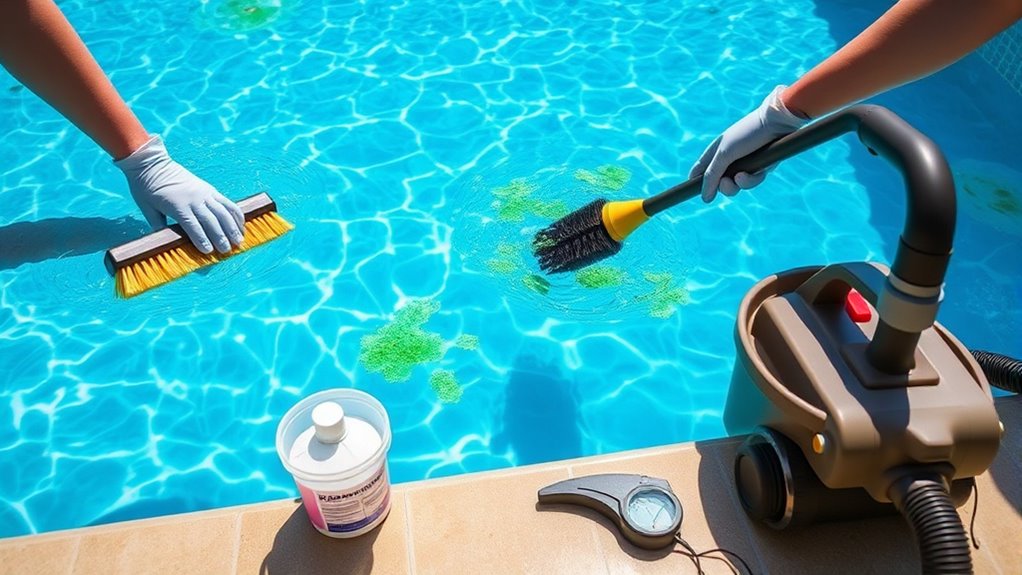
Algae growth in your pool can turn crystal-clear water into a green, murky mess, making swimming unpleasant and potentially damaging your pool’s surfaces and equipment. To effectively eliminate algae, it’s essential to first identify the specific type of algae present, as different varieties require tailored treatments.
Balancing your pool’s pH and chlorine levels is crucial, as improper water chemistry creates an environment where algae thrive. Regular brushing of pool walls and floors helps dislodge algae, while shocking the pool with a strong dose of chlorine kills the algae cells.
After treatment, vacuuming removes dead algae debris, and running your filter continuously helps clear the water. Maintaining good water circulation and consistent chemical monitoring prevents future outbreaks.
By following a straightforward weekly maintenance routine, you can keep your pool algae-free and sparkling clean. In this article, I will explain step-by-step how to get rid of algae and maintain lasting pool clarity.
How to Identify Algae Types in Your Pool
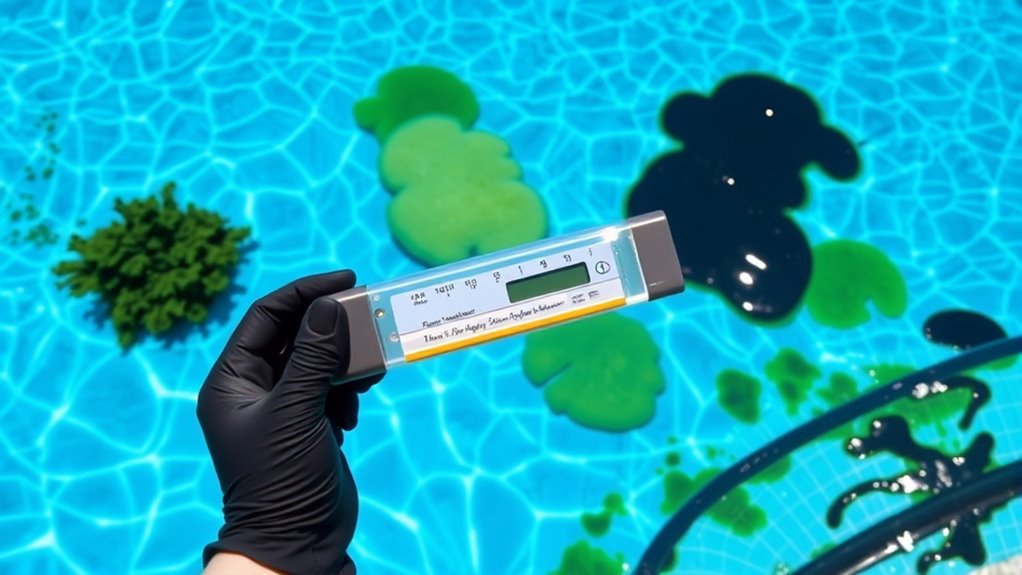
There are three main types of algae that can invade your pool: green, yellow (or mustard), and black. Green algae is the most common, making your water look cloudy or greenish. It spreads quickly but washes off the pool walls easily.
Yellow algae appears as mustard-colored spots, usually around corners and shady areas. It is tougher to remove because it clings firmly to surfaces.
Black algae, the most stubborn type, shows up as dark, black patches. Its root-like structures penetrate the pool’s surface, making it harder to treat. You will notice it in areas with poor circulation or rough surfaces.
Test and Balance Your Pool Water Chemistry
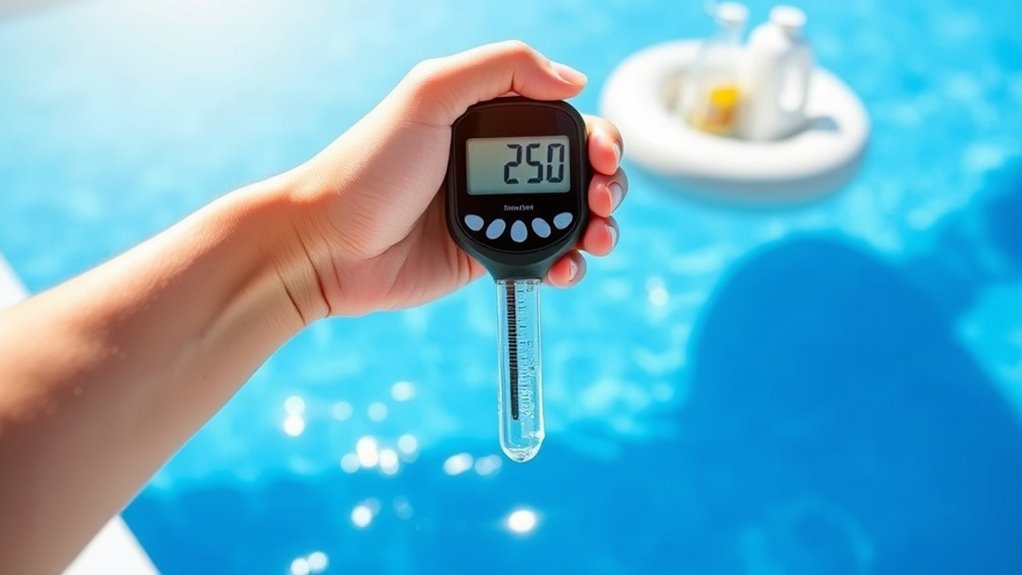
You need to test your pool’s pH levels regularly to keep algae at bay. If the pH is off, adjusting the alkalinity balance will help stabilize the water chemistry. Keeping these levels in check makes your pool less inviting for algae growth.
Check pH Levels
How do you guarantee your pool water stays crystal clear and algae-free? Start by checking the pH levels regularly.
pH measures how acidic or basic your pool water is. Keeping it between 7.2 and 7.6 is essential.
If the pH strays outside this range, chlorine won’t work effectively to kill algae. This lets algae grow unchecked.
Use a reliable test kit or strips to measure the pH. If it’s too high, add a pH reducer; if it’s too low, add a pH increaser.
Balancing pH helps eliminate algae, protects your pool equipment, and keeps the water comfortable for swimmers.
Make testing and adjusting pH a routine part of your pool maintenance.
Adjust Alkalinity Balance
Balancing your pool’s alkalinity works hand in hand with maintaining proper pH levels to keep the water clear and algae-free. Alkalinity acts as a buffer, preventing sudden pH swings that encourage algae growth.
Test your pool’s total alkalinity with a reliable kit; ideal levels range between 80 and 120 ppm. If alkalinity is too low, add alkalinity increaser (sodium bicarbonate) gradually, retesting after each adjustment.
If it’s too high, dilute your pool water or add muriatic acid carefully to bring it down. Keeping alkalinity balanced stabilizes pH, ensuring your sanitizer works effectively against algae.
Regularly monitoring and adjusting alkalinity prevents conditions that allow algae to thrive, maintaining a healthy, sparkling pool all season long.
Brush Pool Surfaces to Loosen Algae
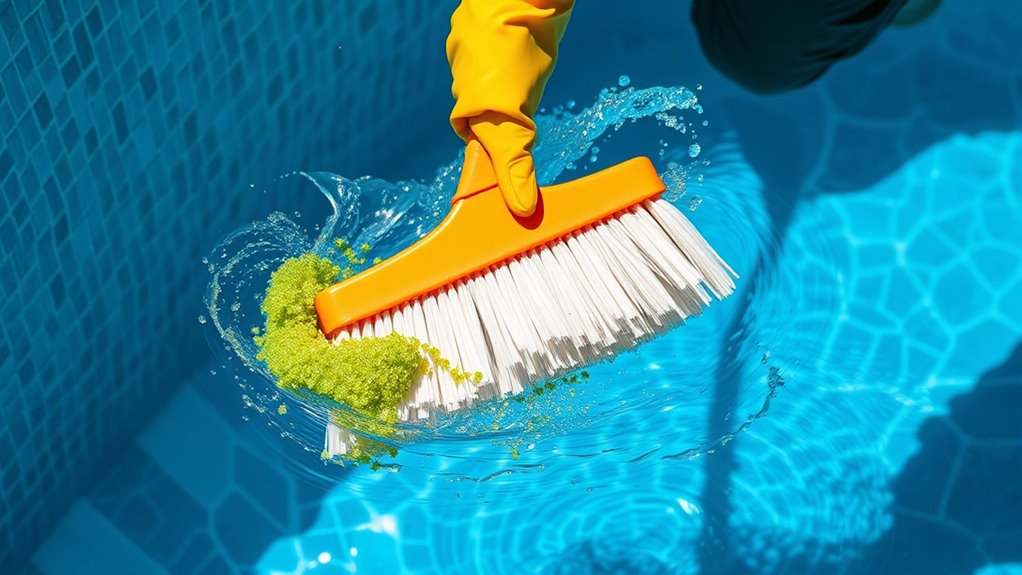
You’ll want to brush your pool surfaces thoroughly to loosen algae buildup. Focus on areas where algae tend to hide, like corners, steps, and near the waterline. Using the right technique will make your cleaning more effective and help prevent the algae from returning.
Effective Brushing Techniques
Although scrubbing your pool may seem like a chore, effective brushing is vital for loosening algae and preventing it from taking hold. Start by using a brush with stiff bristles suitable for your pool’s surface. Avoid wire brushes on delicate finishes.
Work methodically, brushing in overlapping strokes to cover every inch thoroughly. Focus on the walls and floor, applying firm pressure to break up algae colonies. Don’t rush; slow, deliberate brushing ensures you dislodge stubborn patches.
After brushing, run your filter to capture the loosened algae particles. Remember to brush regularly during an algae outbreak to keep the problem from worsening. With consistent, proper brushing, you’ll make your pool less hospitable to algae and maintain clearer, healthier water.
Targeting Algae-Prone Areas
When tackling algae in your pool, focus on areas where it most often takes hold, like corners, steps, and around ladders. These spots tend to have less water circulation, making them perfect breeding grounds for algae.
Use a stiff pool brush to scrub these surfaces thoroughly, loosening algae and preventing it from sticking. Don’t forget to brush the walls and floor, especially near the waterline, where algae loves to accumulate.
Brushing disrupts algae colonies, making it easier for your sanitizer to work effectively. Be consistent—brush these trouble spots at least once a week during algae season.
Shock Your Pool to Remove Algae With Chlorine
How can you quickly and effectively kill algae in your pool? Shocking your pool with chlorine is the answer. This process raises the chlorine level rapidly, killing algae and bacteria on contact. Be sure to test your pool’s pH and chlorine levels before shocking to guarantee effectiveness.
Here’s a simple guide to shocking your pool:
| Step | Action | Tip |
|---|---|---|
| 1 | Test water chemistry | pH 7.2-7.6, chlorine low |
| 2 | Calculate shock amount | Follow product instructions |
| 3 | Dissolve shock in water | Use a bucket for mixing |
| 4 | Pour evenly around pool | Focus on algae spots |
| 5 | Avoid swimming 8-12 hours | Let chlorine work fully |
Shocking your pool stops algae growth fast and keeps your water clean.
Run Your Pool Filter Continuously to Clear Water
Why does running your pool filter continuously matter after shocking? It’s essential because the filter removes dead algae and debris stirred up during shocking. If you don’t keep it running, those particles will settle back, clouding your water and undoing your efforts.
Running the filter nonstop for at least 24-48 hours ensures the water circulates thoroughly. This traps impurities and improves clarity. Check and clean the filter regularly during this time to prevent clogging, which reduces efficiency.
Apply Algaecide to Kill Stubborn Algae
Although shocking and filtering remove most algae, some stubborn patches may persist. To tackle these, apply an algaecide specifically designed for pools. Choose a product that targets the type of algae in your pool, whether green, yellow, or black.
Before applying, make certain your pool’s pH is balanced between 7.2 and 7.6 to maximize effectiveness. Pour the algaecide evenly around the pool’s perimeter, focusing on areas where algae is visible.
Use the recommended dosage on the label—more isn’t better and can cause chemical imbalances. After application, avoid swimming for at least 24 hours to let the algaecide work thoroughly. By following these steps, you’ll effectively kill the persistent algae, making your pool cleaner and safer for use.
Vacuum and Remove Dead Algae Debris
Now that the algae is dead, it’s time to vacuum and remove the debris from your pool. You’ll want to pick the right vacuum for the job to guarantee effective cleanup without stirring up sediment. After vacuuming, follow up with proper pool care to keep your water clear and balanced.
Choosing The Right Vacuum
Selecting the right vacuum is key to effectively removing dead algae debris from your pool. You’ll want a vacuum that suits your pool’s size and surface type.
For small to medium pools, a manual vacuum gives you control to target algae spots thoroughly. If you own a larger pool, consider an automatic or robotic vacuum to save time and effort.
Make certain the vacuum has strong suction to pull up fine algae particles without clogging. A vacuum with a wide cleaning path speeds up the process, while adjustable heads help you reach corners and steps easily.
Also, check if your vacuum is compatible with your pool’s filtration system to avoid damage. Choosing wisely ensures you clean efficiently and prevent algae from returning.
Effective Debris Removal
Once you have the right vacuum in hand, it’s time to tackle the removal of dead algae and debris. Start by slowly vacuuming the pool floor, focusing on areas where algae settled.
Move methodically to avoid stirring up settled particles, which can cloud the water. Be sure to vacuum both the shallow and deep ends thoroughly.
As you vacuum, dead algae and debris will collect in the vacuum bag or filter. Empty it frequently to maintain suction power.
Don’t forget to remove floating debris with a net before vacuuming to prevent clogging your equipment. This step is essential because leftover dead algae can cause stains and encourage regrowth.
Post-Vacuum Pool Care
How do you guarantee your pool stays algae-free after vacuuming? First, promptly remove all dead algae debris from the pool and skimmer basket to prevent it from settling back.
Next, clean your vacuum equipment thoroughly to avoid cross-contamination. Then, check and adjust the pool’s chemical levels to maintain proper sanitation.
Running the filter continuously for 24-48 hours after vacuuming ensures all remaining particles are caught. Finally, monitor your pool daily for any signs of returning algae.
| Step | Action |
|---|---|
| 1 | Remove dead algae debris |
| 2 | Clean vacuum and accessories |
| 3 | Test and balance chemicals |
| 4 | Run filter for 24-48 hours |
| 5 | Monitor pool condition regularly |
Maintain Proper Pool Circulation and Filtration
Because stagnant water encourages algae growth, you need to keep your pool water moving consistently. Run your pump daily for at least 8 to 12 hours to guarantee proper circulation. This helps distribute chemicals evenly and prevents algae from settling in corners or on the pool floor.
Check your filter regularly and clean or backwash it as needed to maintain ideal filtration. A well-functioning filter traps algae spores and debris, stopping them from multiplying.
Also, inspect your pool’s return jets to make sure water flows evenly throughout the pool. Adjust them if necessary to eliminate dead spots where algae could hide.
Regularly Monitor and Adjust Pool Chemistry
Keeping your pool water moving and filtered well sets the stage. You also need to regularly check and balance the pool’s chemistry to stop algae growth.
Test your pool water at least twice a week using reliable test kits to measure pH, chlorine levels, alkalinity, and calcium hardness. Aim to keep the pH between 7.2 and 7.6 because algae thrive in imbalanced pH.
Maintain free chlorine levels between 1 and 3 ppm to effectively kill algae spores. If chlorine drops, shock your pool immediately to eliminate any budding algae.
Adjust alkalinity and calcium hardness to recommended levels to prevent water from becoming corrosive or scaling. By staying proactive with these adjustments, you’ll create an environment where algae can’t take hold, keeping your pool clean and clear.
Set Up a Simple Weekly Algae Prevention Plan
Although preventing algae might seem overwhelming, setting up a simple weekly plan can make it manageable and effective. By committing to a routine, you’ll keep your pool clear and inviting. Here’s a straightforward weekly plan you can follow:
- Test and Balance Water – Check chlorine, pH, and alkalinity levels. Adjust as needed to maintain a balanced environment that discourages algae growth.
- Brush and Vacuum – Scrub pool walls and floors to remove any developing algae. Then vacuum the debris to prevent buildup.
- Run the Filter – Operate your pool’s filtration system for 8 to 12 hours. This circulates water and removes impurities effectively.
Stick to this plan consistently, and you’ll greatly reduce the chance of algae taking hold in your pool.
Frequently Asked Questions
Can Algae Harm My Health if I Swim in the Pool?
Yes, algae in your pool can harm your health if you swim in it. It creates slippery surfaces that increase the risk of falls and injuries.
Algae can also harbor harmful bacteria, causing skin rashes, ear infections, or respiratory problems. When algae bloom, water quality declines, making it unsafe.
Avoid swimming until the pool is properly cleaned and treated. This helps protect you from potential health risks associated with algae-contaminated water.
What Are the Best Pool Covers to Prevent Algae Growth?
Did you know that properly covering your pool can reduce algae growth by up to 90%? Solar covers or heavy-duty vinyl covers are best as they block sunlight, which algae needs to thrive.
These covers also keep debris out, limiting nutrients that feed algae. Ensure the cover fits snugly and seals well around the edges to maximize protection.
Using a pool cover consistently saves time and chemicals, keeping your pool clearer and healthier throughout the season.
How Does Weather Affect Algae Growth in Pools?
Weather significantly influences algae growth in pools. Warm, sunny days accelerate algae reproduction, especially when pool water remains stagnant.
Rainfall can introduce nutrients and dilute pool chemicals, increasing the likelihood of algae blooms. Cooler temperatures, however, slow down algae growth.
To prevent algae outbreaks, monitor weather changes closely. Adjust your pool maintenance routine accordingly to stay ahead of potential algae problems.
Are Natural or Eco-Friendly Algaecides Effective?
Yes, natural or eco-friendly algaecides can effectively address mild algae problems. They use safer ingredients, benefiting both the environment and your pool’s ecosystem.
These algaecides may work slower than chemical options, requiring patience and consistent application. For stubborn or heavy algae infestations, stronger treatments might be necessary for quick, clear results.
Can Pool Algae Cause Damage to Pool Equipment?
Yes, pool algae can damage your pool equipment by clogging filters and strainers. This forces pumps to work harder, risking overheating or failure.
Algae can also corrode metal parts and stain surfaces, leading to costly repairs. Promptly addressing algae protects your equipment’s lifespan.
Regular cleaning and maintaining proper chemical balance help prevent algae growth and keep water flowing efficiently.
Conclusion
By following these 10 steps, you’ll banish algae from your pool faster than a lightning bolt! Keep testing, brushing, shocking, and filtering to maintain crystal-clear water.
Remember, consistent care is your best defense against algae’s sneaky return. With a simple weekly prevention plan, you can enjoy a sparkling, algae-free pool all season long.
Don’t let algae take over. Take control and make your pool the ultimate backyard paradise!