

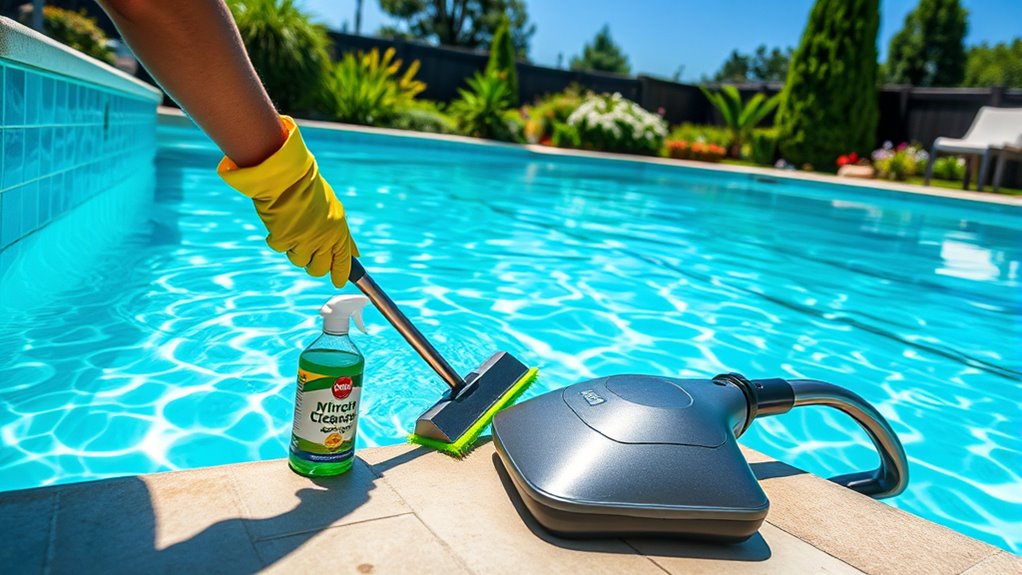
Algae growth in pools is a common problem that can turn your crystal-clear water into a murky, uninviting mess.
Whether you’re dealing with green, yellow, or black algae, knowing how to effectively clean and prevent it is essential to maintaining a healthy swimming environment.
Proper pool care involves balancing the pH levels between 7.2 and 7.6, maintaining chlorine levels within 2 to 4 ppm, and using appropriate cleaning techniques such as brushing and vacuuming to physically remove algae.
Additionally, shocking the pool with chlorine and running the filter for several hours helps eliminate stubborn algae, while applying algaecide prevents future outbreaks.
Regular maintenance is key to keeping your pool sparkling clean and safe for swimmers.
In this article, I will explain seven easy steps to effectively clean algae from your pool and keep it algae-free all season long.
Figure Out What Kind of Algae You’re Dealing With
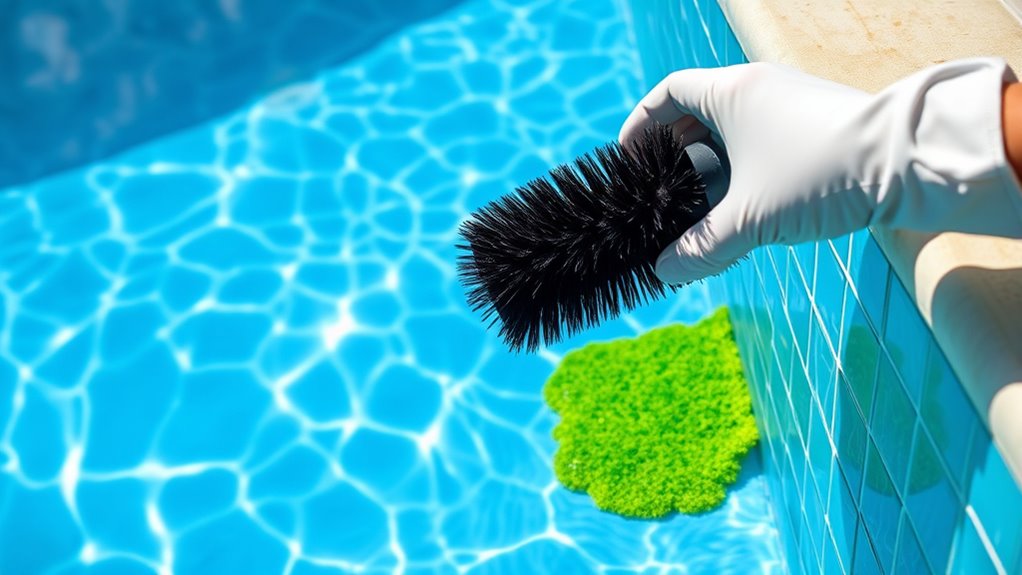
Before you jump into cleaning, you need to figure out what kind of algae you’re dealing with. Algae in pools usually come in three main types: green, yellow (mustard), and black.
Green algae are the most common and give the water a cloudy, green tint. Yellow algae look like pollen or a fine dust settling on surfaces, often sticking stubbornly to pool walls. Black algae appear as dark spots or patches, usually on the pool floor or walls, and they’re tougher to remove because they root deeply.
Identifying the algae type helps you choose the right cleaning approach. Take a close look at your pool’s water and surfaces. This way, you’ll know exactly what you’re up against before starting your cleanup.
Balance pH and Chlorine to Remove Algae
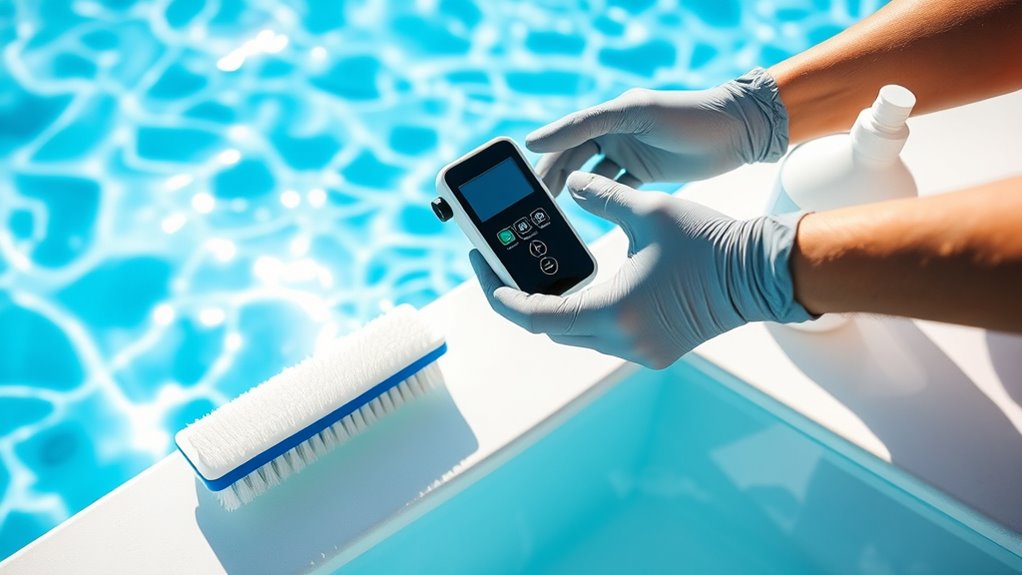
Since algae thrive in unbalanced water, you’ll need to adjust your pool’s pH and chlorine levels to eliminate them. First, test your pool water using a reliable testing kit. Your pH should be between 7.2 and 7.6. If it’s off, use pH increaser or decreaser products to bring it into this range.
Next, check the chlorine levels. To kill algae, raise the free chlorine to at least 2-4 ppm. Sometimes, a shock treatment is necessary to boost chlorine quickly and eliminate stubborn algae. Make sure to follow the instructions on the shock product carefully.
Maintaining balanced pH and proper chlorine levels creates an environment where algae can’t survive. This makes your cleaning efforts much more effective.
Brush and Vacuum Algae From Your Pool
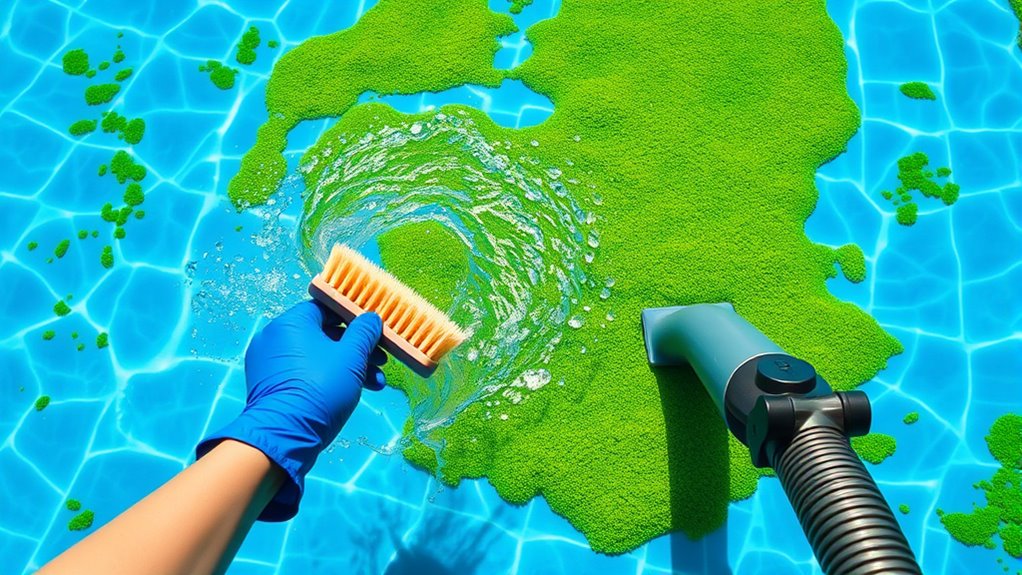
Once you’ve balanced the chemicals, physically remove the algae by brushing all pool surfaces thoroughly. Use a stiff pool brush to scrub walls, steps, and the floor. Focus on areas with visible algae to loosen it, making vacuuming easier.
Next, vacuum your pool to remove the dislodged algae and debris. Move slowly with a manual vacuum to avoid stirring up sediment. For automatic vacuums, follow the manufacturer’s instructions for efficient cleaning.
Make sure your pool filter runs during this process to capture algae and prevent spreading. Regular brushing and vacuuming are key to eliminating algae and maintaining a clean, clear pool.
Shock Your Pool With Chlorine
After brushing and vacuuming to remove algae, treat your pool water to kill any remaining spores. Shocking your pool with chlorine eliminates stubborn algae and sanitizes the water quickly. Use a high-quality pool shock product and follow the recommended dosage based on your pool size.
Here’s a quick guide for shocking your pool:
| Pool Size (Gallons) | Shock Amount (Ounces) |
|---|---|
| Up to 10,000 | 12 |
| 10,000–20,000 | 24 |
| 20,000–30,000 | 36 |
| 30,000+ | 48+ |
Add the shock in the evening to avoid sun degradation. Wait at least 8 hours before swimming.
Run the Pool Filter Continuously
You’ll want to run your pool filter continuously to keep algae and debris from settling back in. Aim for at least 8 to 12 hours a day to guarantee ideal filtration. To save on energy costs, consider using a timer or running the filter during off-peak hours.
Importance of Continuous Filtration
Although algae can quickly cloud your pool water, running your pool filter continuously helps prevent its spread and keeps your water clear. Keeping the filter running removes algae spores and debris, stopping them from settling and multiplying. This ongoing filtration supports your pool’s chemical treatments, making them more effective.
Here’s why continuous filtration matters:
- Prevents algae buildup by constantly trapping harmful particles.
- Improves water circulation, ensuring chemicals distribute evenly.
- Reduces cleaning frequency by maintaining clearer water longer.
Optimal Filter Run Time
When you run your pool filter continuously, you maximize its ability to trap algae and debris before they take hold. Keeping the filter on all day ensures water circulates constantly, preventing algae spores from settling and multiplying.
Aim for at least 8 to 12 hours daily in cooler months. During warmer periods or after heavy use, running it nonstop can be more effective.
Continuous filtration also helps distribute sanitizers evenly, maintaining clear water and reducing algae growth. Remember to clean or backwash your filter regularly to maintain peak performance.
Energy Efficiency Tips
Since running your pool filter continuously helps prevent algae growth, you can optimize energy use by choosing the right times and settings. Running your filter nonstop does not waste energy if you manage it smartly. Here are three tips to boost energy efficiency:
- Use a Variable-Speed Pump: Lower speeds consume less power while still circulating water effectively.
- Schedule Off-Peak Hours: Run your filter mostly during times when electricity rates are lower.
- Maintain Your Equipment: Clean and check your filter and pump regularly to ensure they run smoothly and do not overwork.
Apply Algaecide for Long-Term Algae Control
To keep algae from coming back, apply algaecide after thoroughly cleaning your pool. Algaecide targets and kills microscopic algae spores that survive standard cleaning and multiply quickly.
Choose a product suited to your pool type, whether chlorine or non-chlorine based. Follow the manufacturer’s dosage instructions carefully to avoid overuse.
Pour the algaecide evenly around the pool, focusing on corners and shaded areas where algae tend to thrive. Running your pool pump for several hours after application helps circulate the algaecide effectively.
This step creates a protective barrier, reducing algae growth and keeping your pool water clearer longer. Applying algaecide regularly, especially during warm months, is key to maintaining a healthy, algae-free swimming environment.
Maintain Regular Brushing and Chemical Checks
You’ll want to brush your pool surfaces regularly to keep algae from settling in and spreading. Checking chemical levels often guarantees your water stays balanced and algae-free. Using the right tools makes these tasks easier and more effective.
Importance Of Consistent Brushing
Although it might seem tedious, regular brushing is essential to keep algae from taking hold in your pool. When you brush consistently, you remove algae spores before they grow. This prevents slippery surfaces and staining. It also helps circulate water, allowing chemicals to work better.
Here’s why you should brush your pool regularly:
- Prevents algae buildup – Brushing disrupts algae colonies early, making cleaning easier.
- Improves water circulation – It helps chemicals reach all areas, enhancing their effectiveness.
- Protects pool surfaces – Regular brushing prevents damage and keeps tiles and liners looking clean.
Monitoring Chemical Levels
Since algae thrive in improperly balanced water, monitoring chemical levels is essential to keeping your pool clean. You should test your pool water at least twice a week using a reliable test kit.
Focus on maintaining the right pH, chlorine, and alkalinity levels. pH should be between 7.2 and 7.6, chlorine around 1-3 ppm, and alkalinity between 80-120 ppm. These ranges prevent algae growth and keep your water safe.
If you notice any imbalance, adjust the chemicals promptly. Regular checks help you catch problems early before algae take hold.
Tools For Effective Cleaning
Maintaining balanced chemicals is only part of the battle against algae. Having the right tools makes cleaning much more manageable. You’ll want to keep your pool’s surfaces free from algae buildup by brushing regularly and using chemical tests to stay ahead of problems.
Here are three essential tools for effective cleaning:
- Pool Brush: Choose a brush suited to your pool’s surface—nylon for vinyl, stainless steel for concrete. Regular brushing breaks algae’s hold and prevents spread.
- Telescopic Pole: Attach your brush or vacuum to this pole to reach all corners without straining yourself.
- Chemical Test Kit: Check chlorine and pH levels frequently to maintain water balance, which discourages algae growth.
Using these tools consistently keeps your pool inviting and algae-free.
Frequently Asked Questions
Can Algae Harm My Health if I Swim in the Pool?
Yes, algae in your pool can harm your health if you swim in it. It creates slippery surfaces that increase the risk of slips and falls.
Algae can also harbor harmful bacteria and germs. These may cause skin rashes, ear infections, or respiratory problems.
Avoid swimming in pools with visible algae. Clean the pool promptly to keep the water safe and healthy for everyone.
How Often Should I Replace My Pool Filter?
Replace your pool filter every 3 to 5 years, depending on the type and maintenance. Reduced water flow or poor filtration may signal an earlier replacement. Regular backwashing or cleaning extends filter life. Monitor its performance closely to ensure clean water. Don’t wait too long to replace a worn-out filter.
Is It Safe to Swim Immediately After Shocking the Pool?
You should not swim immediately after shocking your pool because chlorine levels become very high. This can cause skin and eye irritation.
Wait at least 8 hours or until chlorine levels drop to 1-3 ppm for safe swimming.
Use a pool testing kit to check chlorine levels before entering the water. This ensures a safe and enjoyable swim.
What Type of Brush Is Best for Different Pool Surfaces?
For vinyl pools, use a soft-bristle brush to prevent tearing the delicate surface. This ensures gentle yet effective cleaning.
Fiberglass pools require a nylon brush, which is both gentle and efficient for removing dirt without damaging the finish.
Concrete or plaster pools need a stiff-bristle brush to thoroughly scrub away algae and stubborn dirt. Always match the brush to your pool’s surface.
Using the right brush protects your pool’s finish and makes maintenance easier, keeping the water clean and inviting.
Can Rainwater Cause Algae Growth in My Pool?
Yes, rainwater can cause algae growth in your pool. Heavy rain often leads to a 30% increase in algae blooms due to nutrient runoff and diluted sanitizer levels.
Rainwater lowers chlorine levels and introduces organic material, creating an ideal environment for algae. To prevent this, test and adjust your pool’s chemicals immediately after rain.
Conclusion
Cleaning algae from your pool might seem like a formidable task, but with these seven easy steps, it’s manageable. Algae can turn your sparkling pool into a murky mess, but balancing chemicals, brushing, and filtering can restore its clear beauty.
Don’t let algae take control. Stay consistent with maintenance, and your pool will remain inviting and algae-free. A bit of work leads to endless relaxation.