

Cloudy pool water can be frustrating and may indicate underlying issues such as debris buildup, algae growth, or chemical imbalances. When your pool water loses its clarity, it not only looks uninviting but can also affect the effectiveness of your pool’s sanitation system, potentially leading to unsafe swimming conditions.
Common causes of cloudiness include insufficient chlorine levels, incorrect pH balance, poor filtration, or the presence of tiny particles suspended in the water. Addressing these problems promptly ensures your pool remains clean, safe, and enjoyable.
By systematically testing and adjusting your pool’s chemical levels, cleaning surfaces, removing debris, and maintaining your filtration system, you can restore crystal-clear water more efficiently.
In this article, I will explain how to fix cloudy pool water in 7 easy steps, helping you bring back the sparkling clarity your pool deserves.
Identify Why Your Pool Water Is Cloudy
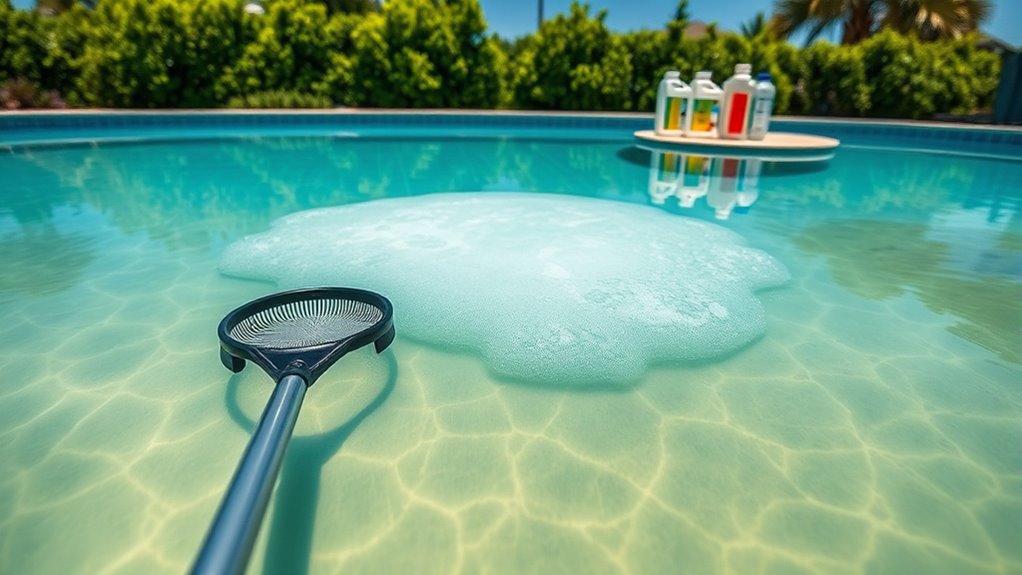
Before you can clear up your cloudy pool water, you need to figure out what’s causing it. Cloudiness often results from particles floating in the water, but pinpointing the source helps you treat it effectively.
Check for debris like leaves or dirt that your filter might have missed. Algae growth can also make water look hazy, especially if the pool hasn’t been cleaned recently.
Debris and algae are common culprits behind cloudy water, especially in neglected pools.
Another common cause is poor circulation, which prevents proper filtration and chemical distribution. Heavy rain or nearby construction can introduce contaminants, leading to cloudy water.
High levels of metals or minerals may contribute to the problem. By identifying the exact cause, you can choose the right solution and get your pool sparkling again.
Test Your Pool Water for Chemical Imbalances
Once you know what might be causing your cloudy pool, test the water’s chemical levels to find any imbalances. Use a reliable pool testing kit or test strips to check total alkalinity, calcium hardness, and stabilizer levels. These tests show whether your water chemistry is off, which often causes cloudiness.
Follow the instructions carefully for accurate results. Pay close attention to total alkalinity because it affects pH stability. Calcium hardness is important too, since low or high levels can cause cloudy water.
Testing for cyanuric acid, or stabilizer, is essential as it protects chlorine. However, too much cyanuric acid can reduce chlorine’s effectiveness. This step helps you understand what needs adjusting before you proceed.
Adjust Chlorine and pH Levels to Clear Cloudy Water
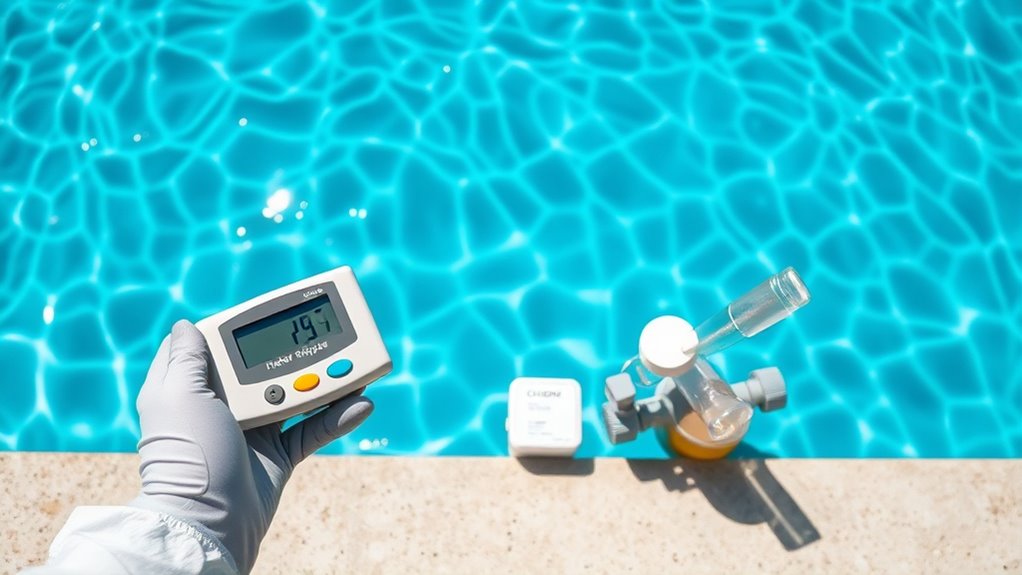
Since chlorine and pH levels directly impact water clarity, you’ll need to adjust them carefully to clear up your cloudy pool. Start by raising or lowering the chlorine level to the recommended 1-3 ppm. Use chlorine granules or tablets to increase it, or add a chlorine neutralizer if it’s too high.
Next, check your pH level. It should sit between 7.2 and 7.6. If the pH is too low, add a pH increaser (sodium carbonate). If it’s too high, use a pH decreaser (muriatic acid or sodium bisulfate).
Balancing these chemicals helps chlorine work effectively, killing bacteria and algae that cause cloudiness. Keep testing and adjusting until you achieve clear, sparkling water.
Clean Pool Surfaces and Remove Debris
Although balancing chemicals is essential, you also need to clean your pool surfaces and remove debris to clear cloudy water effectively. Start by brushing the walls, floor, and steps to loosen algae and dirt buildup that can cloud your water. Use a pool brush appropriate for your pool’s surface to avoid damage.
Next, skim the surface with a net to remove leaves, bugs, and other floating debris that can introduce contaminants. Don’t forget to vacuum the pool bottom to pick up settled particles that brushing and skimming miss. Regularly cleaning these surfaces prevents organic matter from breaking down and clouding the water.
Staying on top of this maintenance will help restore and maintain crystal-clear pool water.
Clean or Backwash Your Pool Filter
After you’ve cleaned the pool surfaces and removed debris, the next step is to address your pool filter. Your filter traps dirt and particles, so when it’s clogged, water can turn cloudy.
Once pool surfaces are clean, focus on your filter to prevent cloudy water.
If you have a sand or DE filter, backwash it by reversing the water flow to flush out trapped debris. For cartridge filters, remove the cartridge and hose it down thoroughly.
Make sure to check the pressure gauge before and after cleaning. If the pressure is high, it’s a sign your filter needs attention.
Clean or backwash your filter regularly to maintain clear water and prevent buildup. Don’t forget to reset your filter system after backwashing to keep it running smoothly and effectively.
Run Your Pool Pump for Proper Water Circulation
When you run your pool pump, you guarantee that water circulates properly. This helps distribute chemicals evenly and prevents stagnant areas where algae and debris can accumulate.
Make sure to operate your pump for at least 8 to 12 hours a day, especially after adding chemicals or heavy pool use. Consistent circulation pushes dirty water through the filter, removing particles that cause cloudiness.
Also, check that the pump and filter are functioning correctly. Clogged skimmer baskets or impellers reduce flow and circulation efficiency.
Running the pump during peak sunlight hours can help prevent algae growth by keeping water moving and chemicals active. By maintaining proper circulation, you support cleaner, clearer water and reduce the chance of cloudy conditions returning.
Use a Pool Clarifier to Clear Cloudy Water
You can use a pool clarifier to help clear up cloudy water by gathering tiny particles into larger clumps that your filter can catch. Make sure to add the clarifier evenly around the pool and run your pump for several hours afterward. Following these steps will boost your filter’s efficiency and improve water clarity fast.
How Pool Clarifiers Work
Although cloudy pool water can be frustrating, using a pool clarifier can quickly restore its sparkle. Pool clarifiers work by gathering tiny particles that cause cloudiness, like dirt and algae, into larger clumps.
These clumps become heavy enough for your pool’s filter to catch and remove them efficiently. When you add clarifier, it acts like a magnet, bonding with microscopic debris that your filter alone might miss.
This process improves water clarity without needing harsh chemicals or draining your pool. Clarifiers complement your filtration system, making it easier to keep your water clean and clear.
Best Clarifier Application Tips
Since pool clarifiers work best under the right conditions, applying them correctly is key to clearing cloudy water quickly. Follow these tips to get the most out of your clarifier and enjoy sparkling clean water faster.
- Add with Circulation On: Pour the clarifier near a return jet while the pump and filter run. This helps distribute the product evenly throughout the pool.
- Avoid Overuse: Stick to the recommended dosage on the label. Too much clarifier can cause buildup and worsen the problem.
- Wait Before Backwashing: Give the clarifier time, usually 24 hours, to gather particles before cleaning your filter. Backwashing too soon reduces effectiveness.
Frequently Asked Questions
How Often Should I Drain and Refill My Pool?
You should drain and refill your pool every 3 to 5 years, depending on usage and local water quality. Persistent chemical imbalances, buildup, or cloudy water may signal the need to drain. Regular maintenance is essential, but draining too often wastes water and can damage your pool’s surface. Test your water regularly and drain only when necessary to keep it safe and enjoyable.
Can Algae Cause Cloudy Water Even With Proper Chemicals?
Algae can cause cloudy pool water even when proper chemicals are used. It hides and multiplies quickly, affecting water clarity. To clear the cloudiness, brush the pool walls and shock the water immediately. Acting fast prevents algae from spreading and keeps your pool sparkling clean.
What Is the Best Time of Day to Treat Cloudy Water?
The best time to treat cloudy water is early morning or late evening when the sun is less intense. Avoid midday because strong sunlight breaks down chlorine and reduces its effectiveness. Treating your pool during cooler times helps chemicals work better and last longer. Plan your treatment when the sun is low for faster, clearer water results.
Are Natural Enzymes Effective for Clearing Cloudy Pools?
Natural enzymes act like tiny cleaners, breaking down organic debris that causes pool cloudiness. They work well for mild cloudiness and reduce the need for harsh chemicals.
For example, after a rainstorm, enzymes helped a friend’s pool clear up within days. However, heavily cloudy water requires additional treatments beyond enzymes to restore clarity.
How Does Weather Affect Pool Water Clarity?
Weather greatly impacts your pool’s clarity. Rain dilutes chemicals, causing cloudy water, while wind introduces dirt and debris that increase cloudiness.
Hot, sunny weather accelerates algae growth, which also clouds your pool. Cooler, calm days help maintain water clarity by slowing these effects.
Adjust your maintenance routine based on the weather. This helps keep your pool sparkling clear and properly balanced year-round.
Conclusion
Clearing cloudy pool water is like revealing a hidden treasure beneath murky waves. By pinpointing the cause, balancing chemicals, and keeping your pool clean, you bring clarity back to your oasis.
Think of your pool filter and pump as the heart, pumping life into every drop. With effort and the right tools, your pool will shine like a crystal-clear gem. It will invite you to plunge into invigorating perfection every time.