

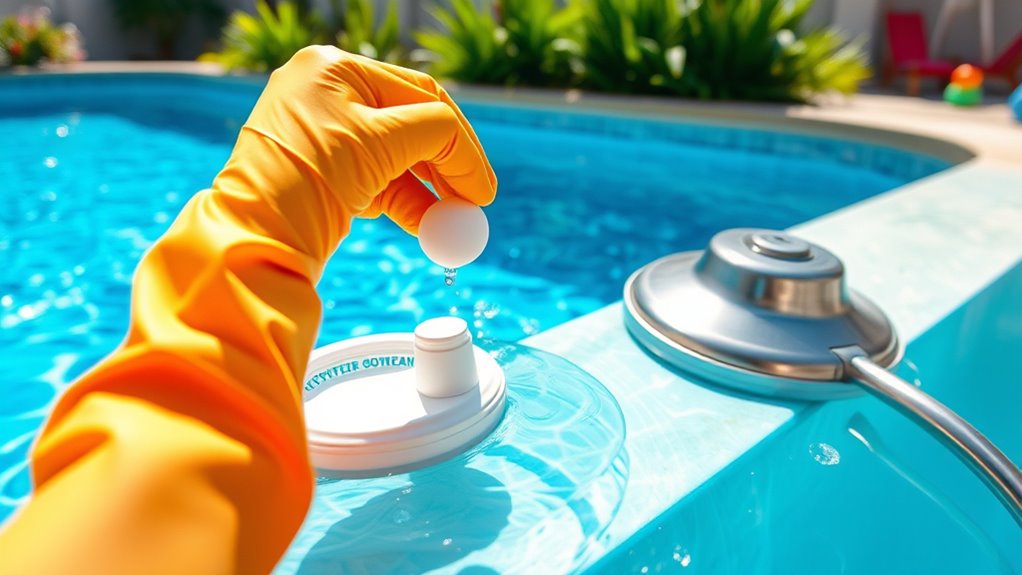
Maintaining a clean and safe swimming pool requires proper chlorination, and using chlorine tablets is one of the most efficient ways to achieve this. Before adding tablets, it’s essential to test your pool water for pH, alkalinity, and existing chlorine levels to ensure balanced water chemistry.
Selecting the right type of chlorine tablets is also crucial—stabilized tablets are ideal for outdoor pools as they protect chlorine from sunlight degradation, while unstabilized tablets work better for indoor pools.
Calculating the correct number of tablets based on your pool’s size and desired chlorine concentration helps maintain consistent sanitation.
Using a floating dispenser allows for a controlled and even release of chlorine, preventing over-chlorination and protecting pool surfaces. Positioning the dispenser in an area with good water circulation ensures optimal distribution.
Regular testing twice a week helps you adjust the dosage as needed.
In this article, I will explain the seven easy steps to properly use chlorine tablets in your pool for clean, balanced water all season long.
Test Your Pool Water Before Adding Chlorine Tablets
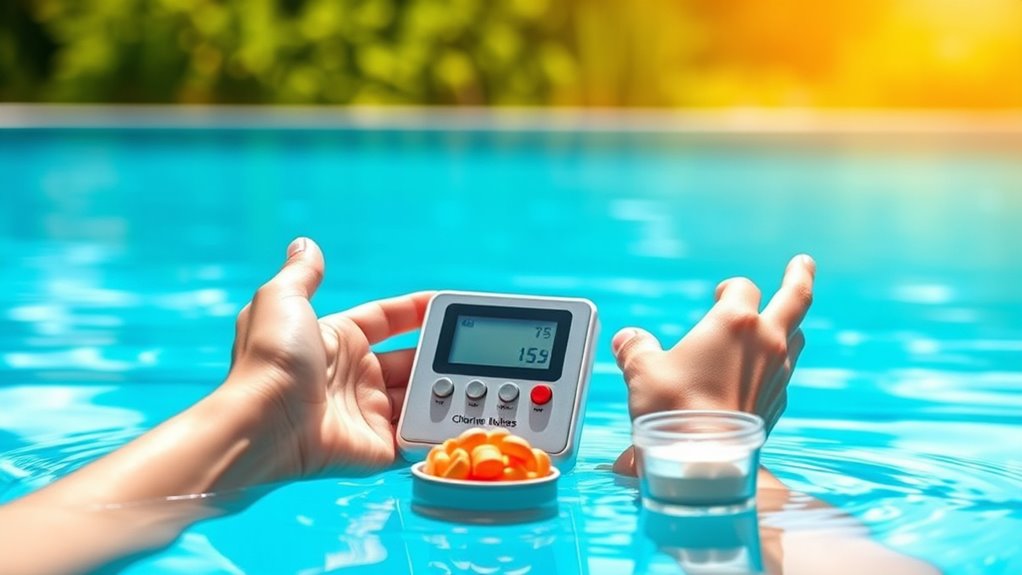
Before you add chlorine tablets to your pool, test the water to verify the chemical balance is right. Grab a reliable pool testing kit or strips and check key levels like pH, alkalinity, and current chlorine.
Your pool’s pH should sit between 7.2 and 7.8 to ensure chlorine works effectively without irritating swimmers. Total alkalinity should be in the 80-120 ppm range to stabilize pH and prevent fluctuations.
If the chlorine level is already adequate, adding tablets might cause over-chlorination. This can damage pool surfaces and harm swimmers. Testing first helps you avoid wasting tablets and keeps your pool safe and comfortable.
Making this a routine step before any chlorine addition helps maintain crystal-clear, balanced water.
Choose the Right Chlorine Tablets for Your Pool
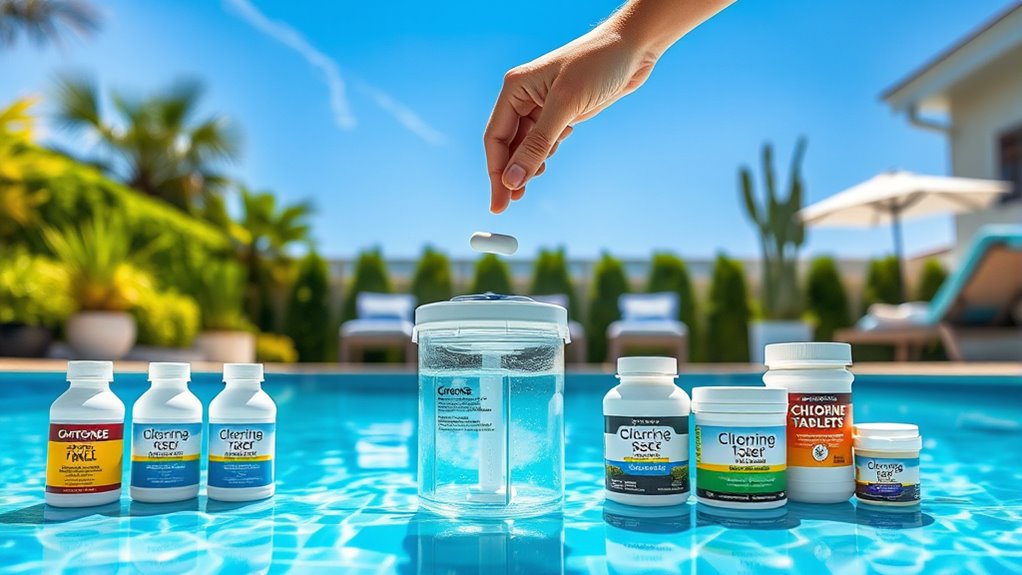
When selecting chlorine tablets for your pool, evaluate factors like tablet size, chlorine concentration, and formulation to match your needs. Larger tablets dissolve slower, providing longer-lasting sanitation. Smaller tablets dissolve quickly for immediate effect. Concentration levels vary, so choose a strength suitable for your pool size. Formulations like stabilized tablets resist sunlight breakdown, ideal for outdoor pools. Unstabilized tablets work well in indoor pools.
| Tablet Type | Chlorine Concentration | Best For |
|---|---|---|
| Trichlor | 90% | Outdoor pools, long-lasting |
| Dichlor | 56-62% | Indoor pools, fast dissolving |
| Calcium Hypochlorite | 65-75% | Quick shock treatments |
Choose wisely to keep your pool clean and safe.
Calculate the Right Number of Chlorine Tablets
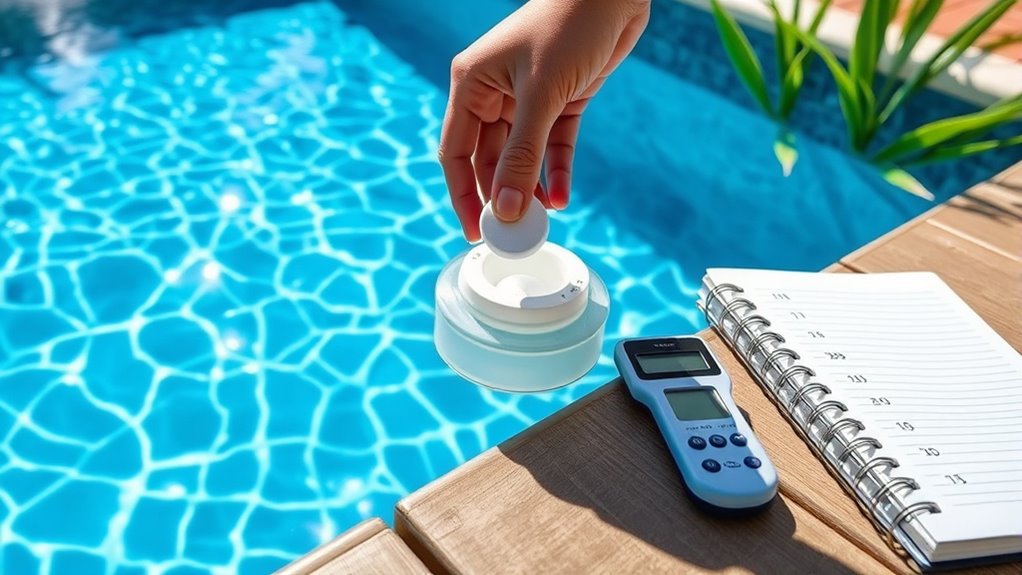
Although the number of chlorine tablets you need depends on your pool’s size and chlorine concentration, you can calculate the right amount by considering key factors. First, determine your pool’s volume in gallons. Next, check the tablet’s chlorine content, usually expressed in ppm (parts per million).
To maintain a safe chlorine level, aim for 1-3 ppm in your pool water. Using these values, you can estimate how many tablets to add. For example, a 10,000-gallon pool typically requires one 3-inch tablet per week to maintain proper sanitation.
Adjust the number based on temperature, sunlight, and pool usage, as these affect chlorine consumption. Regular testing helps you fine-tune the dosage to keep your pool clean and safe.
Why Use a Floating Dispenser for Chlorine Tablets?
Since chlorine tablets dissolve slowly, using a floating dispenser helps control the release of chlorine into your pool more effectively. It allows the tablets to dissolve at a steady pace, preventing sudden spikes or drops in chlorine levels that could irritate swimmers or damage pool equipment.
A floating dispenser also keeps the tablets contained, stopping them from sinking to the bottom where they can cause discoloration or damage to your pool’s surface. Plus, it’s easy to adjust the dispenser’s openings, so you can manage how much chlorine enters the water based on your pool’s specific needs.
Set Up and Use a Floating Dispenser Safely
To set up and use a floating dispenser safely, handle chlorine tablets with care and follow proper guidelines. Always wear gloves when handling tablets to protect your skin from irritation.
Place the dispenser on a stable surface near your pool before filling it. Avoid any splashes or spills during this process. Fill the dispenser with the correct number of tablets according to the manufacturer’s instructions. Overloading can cause excessive chlorine levels.
Position the dispenser securely by the pool and fill it carefully to prevent spills and over-chlorination.
Once filled, gently close the dispenser to prevent tablets from falling out. Float the dispenser on the water’s surface, ensuring it moves freely without getting stuck. Keep children and pets away from the dispenser.
Never mix chlorine tablets with other chemicals to avoid dangerous reactions. Regularly check the dispenser for wear or damage.
Place Chlorine Tablets Properly for Best Results
After setting up your floating dispenser correctly, focus on placing the chlorine tablets to maximize their effectiveness. Position the dispenser where the water flow is steady but not too turbulent. Near a return jet works perfectly.
This placement guarantees tablets dissolve evenly, distributing chlorine throughout the pool. Avoid placing tablets directly in skimmer baskets or the pool’s main drain. Doing so can cause damage or uneven chlorine levels.
Also, don’t overload the dispenser. Follow the manufacturer’s guidelines to prevent over-chlorination. If your pool is larger or heavily used, consider using multiple dispensers spaced out for balanced sanitation.
Proper placement keeps your pool safe, clear, and inviting. It helps chlorine tablets work efficiently without wasting product.
Monitor and Adjust Your Chlorine Tablet Routine
Although placing chlorine tablets correctly is essential, you need to monitor your pool’s chlorine levels regularly. Adjust your tablet routine to maintain ideal sanitation. Use a reliable test kit to check free chlorine levels at least twice a week.
If levels dip below 1 ppm, add more tablets. If they exceed 3 ppm, reduce the amount or frequency. Weather, pool usage, and debris affect chlorine demand, so stay flexible.
| Chlorine Level (ppm) | Action |
|---|---|
| Below 1 | Increase tablet dosage |
| 1 to 3 | Maintain current routine |
| Above 3 | Decrease tablet dosage |
Keep notes of your adjustments to find the perfect balance for your pool’s unique needs.
Frequently Asked Questions
Can Chlorine Tablets Damage Pool Liners?
Chlorine tablets won’t damage your pool liner if used correctly. However, letting tablets sit directly on the liner can cause discoloration or wear spots. Always use a floating dispenser or chlorinator to protect your liner. This ensures chlorine spreads evenly, preventing harsh contact that can weaken the liner over time.
How Do Chlorine Tablets Affect Pool Algae?
Chlorine tablets kill pool algae by steadily releasing chlorine that breaks down algae cells and stops new growth. Maintaining consistent chlorine levels prevents algae from taking hold and keeps water clear. Regularly testing and adjusting chlorine ensures your pool stays algae-free and inviting. Avoid letting chlorine drop too low, as algae can quickly multiply.
Are Chlorine Tablets Safe for Kids and Pets?
Chlorine tablets are unsafe for kids and pets if swallowed or handled incorrectly. Store them securely out of reach to avoid accidental ingestion or skin irritation.
When adding tablets to your pool, wear gloves and avoid direct contact. After the tablets dissolve, ensure chlorine levels are within recommended limits before allowing kids or pets to swim.
Can I Use Chlorine Tablets in a Saltwater Pool?
You can use chlorine tablets in a saltwater pool, but caution is necessary. Saltwater pools produce chlorine via a salt chlorine generator.
Adding tablets may disrupt the chemical balance and lead to over-chlorination. Always monitor your pool’s chlorine levels frequently.
Adjust the generator settings if you use tablets to maintain proper chlorine levels. Consult a pool professional first to protect your equipment and water chemistry.
How Long Do Chlorine Tablets Take to Dissolve?
Chlorine tablets typically take 3 to 7 days to dissolve completely, depending on water temperature, circulation, and tablet size. Warmer water and good circulation speed up dissolution, while colder water slows it down.
To maintain proper sanitation, regularly check chlorine levels and replace tablets as needed. Always use a floating dispenser or chlorinator for safe, even distribution instead of tossing tablets directly into the pool.
Conclusion
Now that you know how to test your water, choose the right tablets, and use a floating dispenser safely, you’re ready to keep your pool sparkling clean. Remember to place the tablets properly, monitor chlorine levels regularly, and adjust your routine as needed.
By following these steps, you’ll protect your pool, preserve your investment, and enjoy crystal-clear water all season long. Plunge in confidently and make every swim invigorating and safe!